Kostas Chalkias, Mysten Labs: The Cryptographers of Greece and the Blockchain of the Future
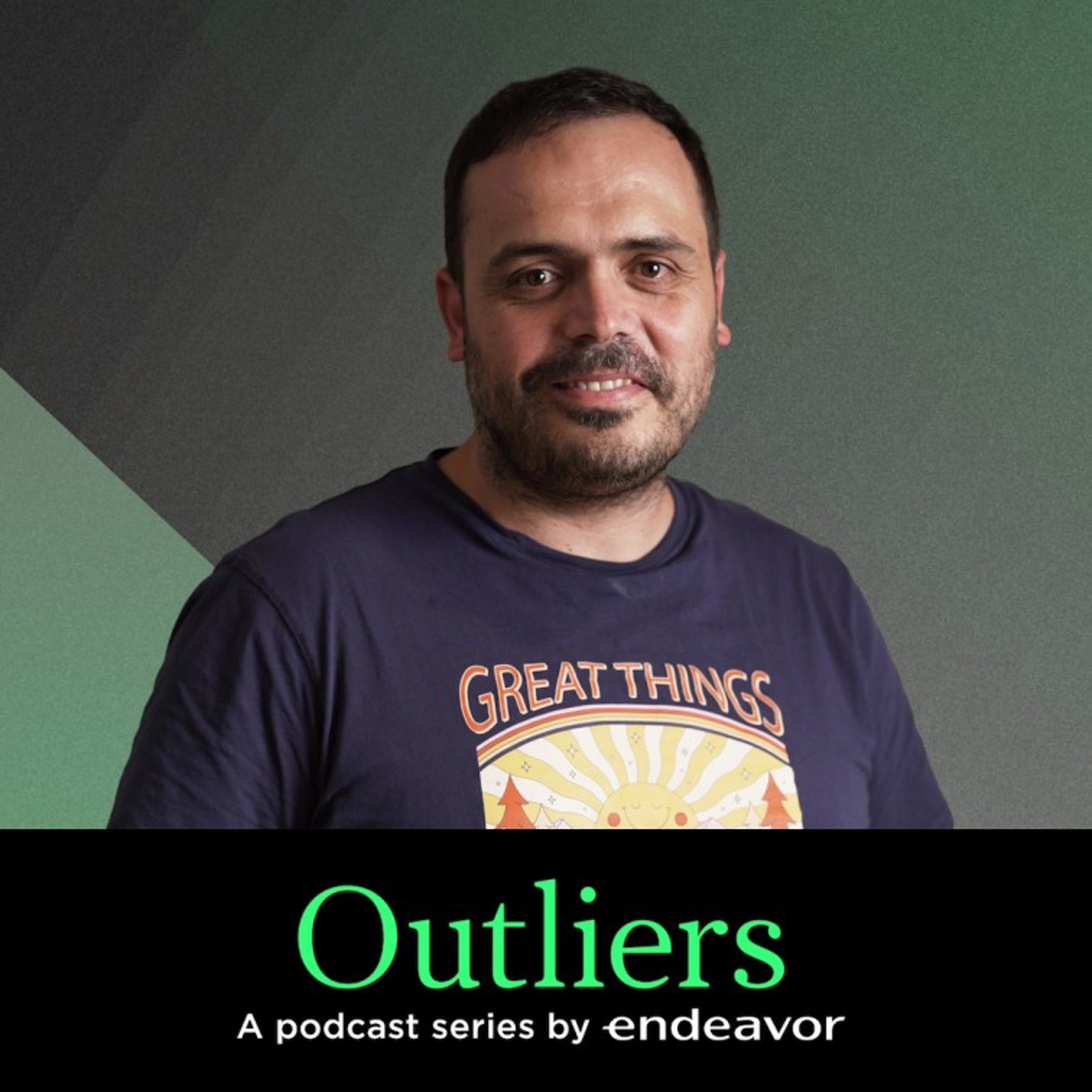


- (...) Is there any advice that stands out to you? A piece of advice you’ve received in your life that has stayed with you?"
-"I had read a quote, and a professor of mine shared it with me: 'the ultimate inspiration is the deadline.' You need to have a deadline to finish something."
About the speaker
Kostas Chalkias is the Co-Founder and Chief Cryptographer at Mysten Labs, where he drives innovation in blockchain security and cryptography. Previously, he served as the cryptography lead at Facebook (Libra, Novi, WhatsApp) and head of research at R3, leading advancements for the Corda blockchain and Conclave SGX. With over 20 years of software engineering experience, Kostas has held leadership roles, including CTO positions at Erybo (CA) and Safemarket (GR), focusing on Big Data and Security. A prolific researcher, he has authored 50+ scientific papers and contributed groundbreaking work in Zero Knowledge Proofs, EdDSA, Timed-Release Encryption, and Key-Compromise attacks. His innovations include 8 US patents and some of the fastest protocols in cryptographic fields, earning him three Best Paper awards. As an educator and community leader, Kostas has taught cryptography, statistics, and programming at the University of Macedonia for nearly a decade and founded Greece's largest Big Data Meetup, fostering a vibrant 2000+ member community.
Transcript
Panagiotis: Kostas, hello.
Kostas: Hello, Panagiotis.
Panagiotis: Thank you very much for being with us today. A very interesting episode. We will try to understand many things for your company and for you. I'm so glad you're here and you are with us because I have met you in America several years ago and I know that the family has recently returned in Greece we also have a nice repatriation here, but the most important of all is that you have a company that which thrives and we all must know it. Especially in Greece because this story has Greek roots and we need to know it all of us and I am very happy that we will tell the story today on our podcast.
Kostas: It's good to see you too in Greece for the first time and we are talking in Greek.
Panagiotis: Exactly.
Kostas: And that's nice. Panagiotis: Let's go. You're co-founder of Mysten Labs, which is a company which at the moment has grown too much. Not very well known in the Greek ecosystem, at least as much as we understand the reputation of this company in the Greek ecosystem, one of the largest companies. That have been established by Greek founders.
Kostas: They are also foreigners and Greeks together.
Panagiotis: Of course, but I mean that Greek founders within an international tech story is perhaps the biggest that we have found so far.
Kostas: I don't know how to compare with others. I can tell you a little bit, the very simple things. They are 5 founders, 2 of them are Greeks. George Danezis living in England and I, Kostas Chalkias who I am… I was in America and now I'm back. Half Greece, half Dubai this time right now and we have three Americans and okay, Greece has always been very important piece in general of cryptography we can say now for my company. Many do not understand what cryptography is. Some understand with what it is associated from the word crypto, which means secret and I'm writing something secret like that you have on Whatsapp that can't e.g. Facebook read your messages and think that this thing has a Greek root in itself. And that's why Greece. Even though Mysten Labs was, is a company which represents our country now in this the space we move in. Cryptography is a Greek word, we have too many successful Greeks. It's no coincidence that in one of the largest cryptography conferences in the world which has 60 for example, researchers who decide which papers will get in, the 12 are Greeks. Think the percentage of the population we have and what applies to the industry. That's why it might be playing a small role that Mysten Labs has a Greek spirit.
Panagiotis: I think that generally in cryptography communities, the Greeks are perhaps some of the top in the world.
Kostas: That's true I would say because I've even discussed it with some people. e.g. with Startup Pired in Greece who writes some articles for businesses and with many others. The crisis is a bit to blame, I think. Then, many people started to do PhDs and all that and because this space, what we call blockchain or cryptocurrency is new, we had an extra incentive to invest some grey matter, to solve our problems. Maybe it plays a role, I have discussed it with too many. Why so many Greeks in this space? Why did we have to involve in and it really worked.
Panagiotis: Yes, I know you studied in Greece and it would be interesting to hear
a little bit of your opinion on the Greek university, because there are times when
the Greek university puts out teams people who are world class, are top in the world and they are from all the same school, the same year. Such is the case with you and I very much want us to go into it. But before we go into your life and where did you start? What are the points which are the turning points, I'd like you to give us a small definition for Mysten Labs.
Kostas: Mysten Labs is a company that like I said was built by 5 co-founders who were all working together on Facebook. Facebook when they started this with the bitcoin if you've heard of ethereum and all of this, it tried to make its own a currency for many reasons. Because Facebook pays (unintelligible) every time you pay on Facebook advertisements and all, it gets a small percentage, an interim so we really had our own teams inside. Facebook had been running this project for 2, 3 years. Too many people participated. When circumstances no longer left us fix this from Facebook, we all left, 5 of us made the San Francisco-based Mysten Labs. We also have a very, very nice office in the center of Palo Alto and we set about making something which as a plan is as you think the databases, but right now is not a database that Google has, Amazon has, Facebook, Apple. It belongs to the whole world essentially and people vote on which transactions will get into the database. Mysten Labs is essentially the company producing the software. For all this process and I think we are from the most innovative in the world. Because let's not lie now, people who worked on Facebook and many followed us when we started the company. The company is currently about 200 people worldwide. Working mainly remotely based like I said, San Francisco, but also with office in Greece, Korea and Singapore and Japan, too many countries and England. We essentially produce technology to make transactions on the Internet much faster and be more decentralized. There is not a specific entity. A weekend, it shuts down and the switch is basically off. You can't do actions. This is what we produce, this technology we have the fastest algorithms to solve this problem and maybe the best so that the world can learn to enter this space. It is very easy to create an account. It used to be very difficult. Think now here people to remember 30 password characters. You can't do that. We simplified it, we found ways with your face, with Google, your account with these things and that's where this innovation gave us as Mysten Labs essentially a stamp that we are a unicorn now, which means we've had a recent valuation of the value of over 2 billion some years ago, but that's not all. Because we have this innovation and a lot of people used to work at Apple, on Netflix, Facebook at all these big companies. They basically brought this whole grey matter in my company and I am very, very pleased with how we work in terms of innovation. First of all we have many patents, many algorithms, best papers at conferences. This whole system and now I would say connects us very much and us as Greeks, I'm very excited with what we built Greece. Think of many coming here for cost center. Not paying too much money to have developers. We offer good wages and all the kids work on things which are innovative, so this is Mysten Labs.
Panagiotis: Two things I keep are, the first is that you guys are working on making transactions, more seamless and easier, and more transparent.
Kostas: Transparent and with fewer interims.
Panagiotis: And with fewer interims, which I can imagine why this thrives and why it grows.
Because I can imagine the whole world and all companies need this as technology and I guess that's a fantastic group on Meta, Facebook. It started to do it, the libra that was Meta's project didn't work out and they go and do it themselves, do it a little better possibly.
Kostas: And much better. Starts ups, guys, they run much faster. Facebook, we are one small startup inside Facebook. Facebook has many companies, the messenger you have, the whatsapp you have which I happen to be in one lead, the cryptographer of some projects of them and instagram are specific projects within Facebook. We were really another entity, we were a sub-entity of Facebook. This thing can have 1000 employees at some point, in a very large an organisation of 100,000 employees, but you're still slow, because there are a lot of pieces, which unfortunately must due to the bureaucracy to go slower. We accelerated them so much.
Panagiotis: And the second one I keep that is very interesting is Greece
and we have to understand that, is one of the top cryptography communities in the world.
and since we also have the good fortune to have a success story and a very strong company like Mysten lab, we have a chance to make perhaps a global crypto hub that are not only Greeks because it doesn't have to be only Greeks, in Athens.
Kostas: This is true. We start it and we are not just us, to tell you the truth. There are also some Greek funds here and you and many, many others who are involved in the field. This space must be distinguished from cryptocurrencies, creates new forms that we can set up companies. Consider that one of the applications which is amazing, is to buy a football team, all together here and there's not a President. This is decentralized. You can vote "Kostas, you'll be the one to play today" and 10 others to say "Let's put Kostas quarterback." Several models will be made that we haven't seen before or even what we said, the cadastre will soon be on Google Map, click and that's it. Only if there is a single database, this becomes feasible. This is what Mysten Labs does at this time.
Panagiotis: Tell me a bit about where you start, where you were born and grew up certain parts of your childhood, your student life that have played a role in this process?
Kostas: I am from Northern Greece, my parents are from a village in Halkidiki, very, very close to Mount Athos. Imagine that I've been many times Mount Athos for work, however chopping wood, things like that...
Panagiotis: What is the name of the village? Kostas: Middle class family. Ierissos is the name of the village and is from the place where Aristotle was. Aristotle the Great was born, the Greek teacher of Alexander the Great. This affected me very much, as strange as it may seem to you, because in our family tree we have Aristotle, I have uncles Aristotle and maybe they would have named me Aristotle. Somehow it was created from the beginning, you know, that intense Innovation... Since I have read so many books… So I went to school in Thessaloniki finally since 4, 5 years old. This child is from where Aristotle is. This creates a little incentive for you to look into it a little more. I was watching the experiments, I was excited about it. My biggest, I think, here's the lucky spot that my parents bought me computer when I was 6 years old. That made a great difference in my life. If you ask me what really affected more my particular career now. With how things would have turned out is that I bought a computer in '88 with green screen and back then there was a programming language called basic 1.1. Amstrad the computer. Some of you, if there are 40 years old, may have had an Amstrad in their lives. That helped me a lot, because it helped me very much, but it is a detail of great importance, My first English book that I read is how to code on this contraption and I learned to make... If you remember a game…The Arcanoid, that is, a ball that goes and pops the blocks and all that. When you start from 6 or 7 years old and you say this book shows me something. I was a parrot, I didn't know anything, if this, do this, if that, do that, the ball goes right and left and suddenly I saw within a year, 7 years old, that I made a program and I knew what it was. My parents, as I told you from a middle class family, they didn't understand what I was doing. They were expecting to get me a computer to play games and finally that's what helped, that was the biggest at a very young age that helped me.
Panagiotis: A family getting a computer and a six-year-old kid getting a book "Coding and programming".
Kostas: It was with the computer.
Panagiotis: Oh, they were together? But reading it, certainly one of the 2 parents at least has had a dream.
Kostas: My dad had the first pirate radio station in Halkidiki.
Panagiotis: Okay, I got it.
Kostas: So it was a man of electronics. Okay, that helped a lot, which we still have. I wish I could bring him and here at some point. A station now that was working on before I remember 40, 50 years maybe more. That may have helped him, maybe he liked it. Because my parents were young when they got me, my dad was 21 years old. when I was born. He probably liked it and said, "I guess I'd like it too. I'm young, 21 years old, I'll take the computer for Kostakis but I will also play". I was quite involved in chess as a kid, this helped and board game, that is, what backgammon, chess, and we could play backgammon now. I like it very much, I like it very much too, I remember in elementary school I was telling the teacher "Look I'm going to be rich, I will win the lottery". I was stuck and with the probability too. I loved thinking mathematically.
Panagiotis: You wanted to hack the lottery.
Kostas: Yeah, I wanted to hack the lottery and was very engaged with the probability and
I'll give you an example which was a lot of fun. My first job was as a fisherman. Fisherman, 16 years old in a seine, It's just that you have a light bulb. and goes around with the boat because my grandpa was a fisherman in a seine, and taught me these things and because grandpa had died a few years ago years I kinda said I want to do it and I did this once and I'm in Ierissos 1, 2 years in the summers. I used to work in a seine and I was thinking about probability again. That's how we catch the fish, that's how we improve this… Because I was doing hacky things. Panagiotis: It's a way of thinking.
Kostas: It really helped me throughout my life this way of thinking of being involved in something, to solve a problem helped me very much and I will say that Facebook was never going to get me if I didn't participate in competitions, so now we're going to get to at some point to say how I got to Mysten Labs and I give it as a piece of advice to many and the professors of the university I'm giving it as a piece of advice. Then, I entered the dept of applied computer science in Macedonia. I'm not going in the med school. I could go to the med in Thessaloniki and in Athens which were the the only 2 med schoold I wanted I could go to all the others, but I didn't. My parents wanted me to stay in a big city and the applied informatics sneaked into my mind
and it was the great miracle for me. Because I don't know now I see blood sometimes, and I say. I was not, I would not be a good doctor.
Panagiotis: But med school was the first choice.
Kostas: Yeah, me and Spyros Xanthos maybe who is also a great Greek. We're from the same dept of applied informatics, friends since we were 18. You had the med as first choice.
Kostas: We could have been, and Spyros wanted the med as well, but we entered into applied informatics. Awesome and it's so much fun that we were a bunch of failed doctors. We were the first batch with the new system after the stream exams. The old ones may remember the stream, 14 courses in panhellenics, we were very knowledgeable on various issues.But that helped us because you went there and we who were into computers, don't think we were studying a lot in the university. The most important detail is this that I will say we had some teachers, lucky me that my math teacher in computer science said to me, "You know what combine 2 sectors and you have no rival afterwards, really." When you learned good math and computer science, it was very difficult to find which is why cryptography is something combined from the 2. To struggle to find a job. It was very easy to work, but you know, and before our technology these crypto and blockchain, you would have been a university professor.
Panagiotis: In mathematics, in physics.
Kostas: It didn't have many jobs. Security is now very important. Now security is very important and you want the cryptographers not only for what Mysten Labs does for everything else, and we really help and we as a company, although we do this, I've got a lot of people calling or working with us because we have this knowledge in this area of security. Well at the university to go back a little bit. This team that we were 6, 7 people too strong. There is a small friendship and competition constantly. So as soon as we're done, I think we were involved in a lot of projects on the side. Not what the professor said. What I want to say to the professors is to run some competitions. For the kids to win, and after they are done and have it on their resume. Oh, I came in third there. I came in fifth there. You are not competing with the Greek. Now these are all friends with each other. Am I finally competing with my fellow students? Not at all. You're competing with the American. You're competing with England. You're competing with China. That's where you're going with some things on the resume, why wouldn't you have created things?
Panagiotis: Did you participate in competitions?
Kostas: Too many. I have lost many competitions.
Panagiotis: Competitions, student competitions?
Kostas: Not just students. The National Bank was, for example, holding its annual innovation competition. I started 30 place after 6 place after 10. At some point I came in third. I had an algorithm that I'm going back to back to the probability that was building a random number machine in which no one can steal anything. Which this, although I came in third here. Unfortunately there was no ecosystem here at that time. The National Bank tried a to help, it wasn't possible, but in England they saw me and this was my ticket. A competition of the National Bank of Greece to go to England and work there. Those who know the history of bitcoin and it made the great difference in my life with one of the first. Not a cryptographer, but a programmer of Satoshi, who we don't know who he is or she of Satoshi or they of Satoshi. I don't know who they are either, but he the man was so close to this place that all of a sudden you bring a kid from Greece, who has participated in research projects at the university. That was my job, Professor. I was and assistant professor at the University on major projects with Phillips in France, for the biometrics, to put our fingers on the machine, then the beginning of putting the fingerprint. But not someone else to touch and steal it from you. I mean, I did those jobs and that man changed my life afterwards. That was the big difference and then it was out of there too easily. So Facebook, when it sees you, he has won a couple of competitions, has a PhD in cryptography and worked with him from Satoshi. It was much easier to go in and get a...
Panagiotis: No brainer, I'll say.
Kostas: I'm not saying I wasn't interviewed, but in the meantime it has a very nice trick I have a friend, Thanasis, Doulas, I'm going to say this because really this man helped me who told me as soon as you were up on Facebook, don't be silly, get more interviews. and Google, get Apple.
Panagiotis: It's very interesting, though that you say because one of the problems that we see in the Greek ecosystem is the creation of innovation and the creation of new solutions, new things and that I hear that there was a turning point in your career, of a larger group were the competitions, which were… Many of these were held by Greek companies. But I'm not sure that right now if endless competitions are running with the Greek universities and the Greek companies...
Kostas: I'll fix them. I'm ready, I'm here to help with that.
Panagiotis: And it's so beautiful and so important.
Kostas: It's very helpful.
Panagiotis: That such competitions can put you on the map, on world maps and find a job later and it doesn't have… No need for the company which launches the competition to be able to top it all. It puts you on a map and eventually you might end up in another country, another company. Because you have done, you have excelled in a competition or in a partnership made between the corporate world and the university. Tell us a little bit about your story on Meta, on Facebook. Then because I think it's a turning point so...
Kostas: Really. What matters is how I arrived, I went there. With my previous company I've been to a conference and the one who is now my CTO and my co founder in my company was sent by Meta to sit down and pick talents from this conference. They do that too. And as I was presenting, I was in a paper along with the one before as I told you with him that created bitcoin Mike and he says how bad can this paper be that he will present. A Greek presents, but how awful to be with an important man, this particular job. He sends straight away as soon as he returns, I saw it later because they didn't erase anything in the past that someone has written within the company, in emails and what we have and I see that he's has written 2 pages over there. I met a Greek who works on post-quantum theory. I was actually building algorithms when quantum computers are built, the computers of the future that will be millions of times faster, they will not break the cryptography that we have today. WhatsApp will again not be able to read your messages and all that, so this man wrote to me an amazing preamble on Facebook and they called me afterwards and so the process began. We want you to come. I'm going to Facebook, discussing my company… In England, they immediately make counteroffers, because you know in England there is also garden leave they can tell you, you don't leave, you leave, I pay you six months but you can't go to a competitor. They didn't apply that, because I stayed for 2 3 months and they can...
Panagiotis: Implement it without yours.
Kostas: Yes, they can. If you are in important places, they can.
Panagiotis: To competitors, I guess only so or... Kostas: Yes, but Facebook was making this, then the block chain and cryptocurrency that they say I was working to a company also with a block chain. In the end they were very good people, I can't say. When they realized that it is such an offer where they cannot deal with it, I go to Facebook. I'm going through the interviews and for all programmers I will say do it from a younger age. I have regretted how many times I have become 35 years old to apply on Facebook, I should have done it at 25. Anyway, when Facebook was smaller. What scared me? I thought that because I'm from Greece I will not be able to respond in the interview they're going to give me but it was a mistake, because then I saw the interviews and as I said before I did and the trick of getting interviews and with Google and with Apple...
Panagiotis: So you saw many.
Kostas: I saw everything, I'm not saying it was easy, but with good preparation, if he is a bit smart, I think he will get in easier than he thinks.
Panagiotis: In Meta 2018. Why are you hired? What is the job you do and I know that's there, you've said a little earlier. You know the whole team, everybody. the founders are there, working together tell us a little bit about it.
Kostas: My place, the cryptographer, what it does, he takes systems in which he is either looking to find out how it can be cracked like a hacker. This is called White Hat Hacker, that you do not do it on purpose to steal or suggest new ones algorithms so that they do not break, i.e. or you're trying to break the system, or you're trying to build a system that doesn't break. That thing was me and then you protect the information. You know when a user comes in and puts his password cannot be seen by someone who's just on your wifi and sees all the messages that are transferred between you and the telephone company. This thing, that's where we come in and we offer, we make systems which we offer this data security, but it is not just that. A piece of the cryptograph is also what we call a digital signature. Now what do we do? We take a paper A 4, we put a signature there I see it from you too I'm putting it that way myself. Now this system certainly, we will see it in 15 years and laughing.
Panagiotis: It's certainly not safe.
Kostas: There is a new method which is a digital signature, what is a digital signature? You have a key whether it's like a usb stick, whether it's a password which you know there are several ways, or your face with what we call face id on mobile phones and that basically makes a cryptographic algorithm that says only the one who had this device and this key must have put that signature and I can see it from next because I'm watching you there's nothing I can do. The digital signature and information security is essentially the jobs that a cryptographer does. That's what he does. What you need for this, IT because you have to program it and maybe a little good math, not at all of security, has pieces of security that are on the servers the wires are well joined, install correctly programs that already do these and although for me they are black boxes. I don't need to know how they work, I was in the place of knowing how they work, Facebook, as you understand, information security, and privacy are very important. Yes I also went to Facebook after the scandal that happened with Cambridge Analytica and say that when I went we had different treatment because Facebook needed us. Basically, at some point data was lost, I can say as an outsider I believe it was a matter of. That Facebook was working at a different pace despite, that something was done on purpose or all of this happened. I don't know why I came in later, but they certainly needed us. Because we say now they might have holes here and there you have to fix these. After we got all these people to make the cryptocurrency, let them help us and other things around so they took the cryptograph, me, firstly, they set me to make the Facebook block chain. This decentralized database, but we have whatsapp, we had instagram, we had messenger Facebook in general has a multitude of products. What we wear the system to watch VR. Occulus. I now, when you come in in a large corporation, although we are a small startp within a large corporation you have access to all messages that the company exchanges, you see a new product coming here and there the others know, "Hey, guys. "The blockchain group has cryptographers, so let us come here on whatsapp a little bit where we will make encrypted payments to help us so I got on there, then came instagram and said the instagram, we want those who create content they can have a stamp, that we call NFTs, which is having a digital certificate that you own this, fit a little bit with the blockchain and the crypto why don't we get into instagram and I participated there as well. So in the messenger team because the messenger slowly put communication, which is encrypted messages. That was my job. I started on blockchain, but practically Facebook is not an organisation, is a really good organization. I've been with Mark Zuckberg and all of them, because at some point I reached a position where I could access them. Even in the vision of the company, how we see where the company goes to tell you the truth that as an employer was probably the top I've ever seen. They were treating us good because we solved major problems for Facebook. That was my job on Facebook.
Panagiotis: Well, you were working on a hotspot. Of security, so maybe you were, for a cryptographer and blockchain expert. Maybe you were in the number one place you should be in the world. Facebook.
Kostas: It was one of the good places, is not necessarily number one in my mind I always had Apple, as the biggest one it offers, it aims more perhaps to the qualitative variables. Facebook was a little bit more open for everything, but it needed us more. If you think about this change of all the laws and that there is privacy and these, Facebook had more users.
Panagiotis: That's what I meant. The need that existed at the point because you're probably perhaps at the worst point the company's reputation, right? After (unintelligible).
Kostas: But think of a worker who is at the same time when its price falls dramatically and then ascends. I was lucky too ...and you were taking...something that plays a very big role in America that I see here. We offer shares to our employees. We are really following an American model full that makes a difference and I have examples of people who they don't believe it in Greece. This culture is slowly I hope to change. You could have told the other guy. Do you want a 70.000 salary and 150.000 in shares? Or 75.000 salary. 75.000 salary. I don't believe in shares, we've been through this. Unfortunately too much strongly in the beginning. I think it's because some people at least in our place understand us that blockchain, eventually you've got a a chance to get some of the products made that either have shares or have their own cryptocurrency and really change my life. And now we're seeing that the way the new employees are coming in and in Greece, because Greece is more conservative country in the piece of, on the payroll they're asking for that too. I want shares. There, my salary was mostly shares. The difference between me and the head of department on cash salary criteria was too little. Our difference was in the shares.
Panagiotis: This share equity model that you describe that we have stock options.
Kostas: We have people who work and get shares.
Panagiotis: It is something that is...Unknown… It is very, very important, is fundamental for the technology ecosystems to succeed and ecosystems innovation. Because if a success story doesn't leave behind it dozens of people rich and dramatically favored by this success we won't have those mafia effects, the mafias that are created, that from a success story other 15, 20 founders or investors or angel investors appear and you start to get this multiplier effect. The team at Meta deals with with this, you know the rest of them.
Kostas: All 5 in the same team. It was very nice the way we found ourselves with the others as Facebook partners. You know if you're in high places, especially in this group you understand when the ship is sinking.
Panagiotis: You understand something is wrong. Kostas: Yes, so we all had. We cannot quit this. We have really spent so much time for it. I didn't take a single day off so to be able to launch again and again. So did the others and our head essentially of this research, that I was member. One day he invites us to a coffee shop. Well, I'm going and I wanted to call them at a coffee shop and the other one wanted to call us to a coffee shop and the other to call us to a coffee shop and eventually we found that we were all so really in the same line of what we wanted to do that there was no way we were going to let go. That is, Facebook can drop this project. There was this thing coming, we must keep it up and we had so much business because of the bureaucracy on Facebook. A lot of what we were thinking about to find out, constantly we would stop because when a product comes out, you can't add new features new things inside in this product and we said guys, we have so much grey matter here. Let's go do it ourselves and one day, I don't know how it happened we exchanged 5 text messages all of us. Tomorrow we start and so it was and now we're talking to people. The one who was the head of Research was a former Apple employee before. We are talking about having 70 80 100 people one of the best in the world under his team. The CTO, Sam who brought me to Facebook he's made a programming language. How do we have Java now? And all this. He created the Move, is called, like I'm walking, like I'm moving which is also the language that we use now for our blockchain which is supposed to be a more modern language to code cryptocurrencies and block chain and NFTs and all the things we were talking about so you have a founder of a language one who has run some of the largest companies. For companies, research teams we have George Danezis. George Danezis. You called me today, I will tell you to invite George over sometime. George was a role model for me. I think he's 2, 3 years older than me. I don't remember. But when I was doing my doctorate I had references of George's work that was for me the best of all time together with Angelos Giagias I would say in cryptography but the one in the systems, that is deeper into the system. In the world almost. I had the opportunity to work with such a man. So we are these 5 and without these five the one who has made programming language cryptographer that I am the other guy who can make systems run better than visas and decentralized already not belong to one entity. The one who has run the biggest research departments in companies that we all have devices from them or we use their tools, Facebook, Apple. The other one who in the product, is one of the most charismatic people to convey the idea and vision, what we want to do in the future, I couldn't say no and I think that I work for a company. It's the company that holds my visa to America and suddenly I say I'm leaving from the security of the big company. I'm going to run a startup.If it weren't for these 5 people, I wouldn't do it. It also has a large America's advantage. There is no, as it is here, month notice, in three months you'll be gone. One day. Bye. One week you'll be transfering information and maybe it's a good thing when technology moves so fast. You want new opportunities, new ideas to be created very quickly. Facebook respected all this obviously. We didn't do much, since the project didn't exist and so we formed the company. That developed at first, after these 5. Do you know how many people left other companies that do blockchain and say "Wait, since these 5 are doing it, I will go with them, as well." and so the original core was created. I from my previous startup and personally from the universities I was teaching some people followed me. Some followed Sam. What he made the programming language some people call George Danezis and suddenly the company in in 2, 3 months consisted of 40 50 people and now we're 200 and the company is growing. So it's going very, very well. But there are many, I would say at least, and PhDs even in Greece. Do you know how many PhDs we have? We may have 7 8 which all these people are amazing in knowledge that offer so much and the whole company under one roof of innovation and that's why we raised so much money. It couldn't very easily be someone who was that, the fear of missing out, as we say which is the fear of being left out. How bad can this team go? With those co-founders that I had my colleagues and with all those people that came in I mean, sometimes you know the investments, you see it you don't just put the idea in, is both the execution and the team. We had a very strong element and the idea was good because we had worked on it already 2, 3 years on our own and we knew what would happen in the future.
Panagiotis: Especially in the first rounds of funding. I think the bet is to the people who are leading the idea.
Kostas: We went with drawings. We went with drawings. The first round of funding, since we were still working on Facebook, were drawings. But when the guy was explaining and asked you "how are you going to do that?" We had good answers.
Panagiotis: I will say that, knowing a little bit and the ecosystem in Silicon Valley was no brainer, I mean, I think that it should be relatively easy to find investors.
Kostas: Let me tell you about it. Firstly we have… When we started that we would raise money one of the biggest funds, VC in the world which is the Andreessen Horowitz, a16z those who know, directly invested in us.
Panagiotis: Tier One Leaders.
Kostas: In crypto, in the world Leader in the world and in the beginning we raised 36 million to about 336 value of the company essentially gives it 10%, and your value is... Panagiotis: 360 million value...
Kostas: 360 million, 336 the value of the company and in the second round, the value of the company went to 2.5 billion and. But what happened to all these mediated? We produced very quickly that is, the second round was raised because when a guy from a drawing and an idea gives you the first money because you're a very strong team, you produce. Perhaps one of the fastest products coming out, that we have seen not to come up with something that can become a product. I think we won a lot there and the second round came very quicklyand the product came out and now we have a cryptocurrency. We certainly have many collaborations. As we explained, big companies. This thing now works like clock. It works very well.
Panagiotis: And to say here that the cryptocurrency only which is, one of the things that Mysten Labs is doing, sui, I will now enter the platform. Let me see the market cap. The capitalization of the currency only when not its value, the valuation of the company the capitalisation of cryptocurrency is 4.5 billion dollars. The sui at the moment.
Kostas: When all the currencies come out, you see the fully diluted value is a bit larger.
Panagiotis: It's even more.
Kostas: Yes, that's true. But why are we there? Because in the innovation part I'm talking
and with other people now and you know I live in Dubai. Coming to Greece, going to Korea, Singapore and these innovation is something that makes us stand out very much. We really have new algorithms every two weeks I won't say every week due to some days off because it really is so intense the number. That's what characterizes us and I have a motto that I'm really working on sometimes burn out, when someone is exhausted in his job, it's not just from all the work it takes. There are such cases. It's because he's bored of what he does and then you're practically going to get very tired faster. You want a change. The rhythm that we work on is really so enthusiastic, and you will see me, the founder to spend whole evenings. I may go to sleep at 7 o'clock in the morning with the guys let alone that in Greece there is also this loyalty that someone wants to offer he sits for hours and delivers it at the end. The way we work and so you're happy to go to breakfast, and you're going for cream and cheese pie amazing, and we have this mentality. There is this thought in everyone's mind that I won't be bored here. Every day I see something that I've never seen before. That's what keeps us going and sets us apart from other currencies and the reason now I will not enter in prices and that's because sometimes I was explaining before, if the whole burger market is going down. Although you were the best burger place, you couldn't get up the period should be helpful a bit, to be good for this space. Now that it's like this, I think our work is apparent.
Panagiotis: What's wrong with the Internet?
Kostas: Many things go wrong. So. First, still on all sites that we have at the moment you have a password and an account. Can Facebook? I used to work at Facebook, can it go on its own and make a post, essentially pretending it's Panagiotis? It can. You have nothing of your own. You have a password that the company actually owns. Not the password, it has anyway, a sample of your password to encrypt your password but you're a record in their database and it might go and override it and post like I am Panagiotis. When we now give users the right they control their account you'll see a new way to social network will be created for such social networking. No one can post on behalf of you or shut your account. Or do something else to you, since only you have that power to put in the digital signature. No one else has it. You're essentially an algorithm, you have an algorithm on your property for signing. I can't steal your key so we solved the problem the ownership of an account. Another way now so completely different. Second is the common database where everyone can go and see the data in a transparent manner. Think now, a cadastre and suddenly someone goes in a public service, and changes the date from behind. You haven't seen the whole story how the date turned out. Whatever he does, as if you had the best prime minister in the country and he has really helped with automation very much.But what you can do can you improve anything if an employee goes and changes something inside? It's very difficult. It can't be done. This technology essentially offers you solutions even if he really wants to steal he can't steal, so it really changes the way. We also found more fast algorithms. You can press a button and now takes 2 minutes to examine something that you are that user that it saw your ID and all that. On blockchain the fast, new blockchain is under a second. In the whole world, wherever you are, in India, in Australia, in Greece. This was an unsolvable problem. In bitcoin, it takes 10 minutes for a transaction to go. We solved this we made it a subsecond. Another application, which is awesome you're giving your money now to a non-profit organization. Where's your money going? Why give 1.000€? Are you sure? Are they end up there where you think? But imagine if you saw the whole process. I gave the 1000, the 1000 moved to this car which carried these the products there. 50€ were lost. I had to pay for these, then this matter was bought and brought to the lion there in Africa, on a steppe for the lion to live and you see these things and they're connected with cameras and drones and show, photograph what happened to these things. Well, now you might want more and next time I'll put where it was 10€ 11€ 12 because now I believe it more. The same applies to your food. Do you trust how food is coming from the field, on the shelf and then to your house? Imagine if all these could get in in a database that even the company itself could not to change the data. The way we think really changes. This is the new Internet. The new Internet offers a transparency, one property to the user himself will provide more evidence that all these are gathered and you can have, see how your data is used and hide your data where you want it to hide. There was no such thing.
Panagiotis: The question that comes to me here is because we as Internet consumers, we have not yet seen very large changes in our experience. So we're not too much exposed I think, the average consumer in technologies, blockchain. And what does that mean? For his life. Where are we right now at application level and how fast is this evolving? Kostas: Very good question. Initially, although many people have now cryptocurrencies and make transactions just so you know, they transfer from one currency to another. It's something that's happening right now. They think of bitcoin as gold. So it's an asset. In America, your pension can be in bitcoin and I hope to sui later and all of that. So this is one, and you will see it, because already some countries follow it. A part of your money can be in bitcoin. That's one part of it. The second part is e.g. we're doing a partnership now with the Greek stock exchange. Why does this help? Consider that Greece while we start a pilot project first I can think a little the future of what could be done. Imagine if anybody could buy from around the world much easier and with one click, a Greek share especially now that all the American you can download from here an app and buy it. A few years ago it wasn't so easy to get Facebook share, now it is. This, however, will have as a result in the future some Greek entries not to have anyway the other, the ordinary user to prefer the American because he still hasn't figured out what the Greek ones are worth. If you enter blockchain? What do you do? You're giving access to this whole world because the database is the same in the whole world and you can't steal, and so the Athens Exchange is safe and the user also has his shares even if he doesn't trust the Stock Exchange. We said, he pushes the button. It's not a day you open your bank e Baking and you see zero. That can't happen anymore.
Panagiotis: In fact, if I'm not mistaken, it's the world's first stock exchange that launched pilot. Exploring blockchain in pilot. Sure, that's very good. Because as a country, we also want automation. For me maybe the best application, is made abroad. It starts slowly, it will be the cadastre when we buy a house open the Google Maps and push a button and buy it. So imagine getting there and no one can buy it bypassing you or putting other signatures and will also participate you can press a button,at the same time a pop up, a little message appears to the notary, he clicks on and it was bought.
Panagiotis: Which seems too much... Kostas: They need to change maybe some laws so it is not so. That's why we are trying to do, to talk to some very important people in the world and the reason I'm also in the United Arab Emirates and some of our other people go to Singapore. One can go to Japan and America, of course, and England because we need to educate people. You're right and I really believe that although the cryptocurrency part went faster in the world, because everyone they want to get rich and they do that this is perhaps the trigger to get into the space and then you have to use it for serious applications. We are at that stage. Now the technology is at the stage where begins to be used for applications that solve problems. Here we are now.
Panagiotis: In which sectors it is done already and maybe we use it and we just don't know it so well and in whom you see directly very fast changes coming? Kostas: Good. What is very successful on the blockchain is that it has to do with Finance, with economics. But not only trading. It can be used not only for payments, to buy a dollar coin convert it into euros and then get yen and all this without interims so that you have better profit on it. Also, the blockchain has a great advantage for those who are engaged with financial. What we call high frequency too fast to go to buy something in England and sell it to Japan at the same time and then buy something in Africa and that would make me a profit. In the real economy this problem couldn't be solved. Why? Can you understand why? Because there is not one database. When I go and buy something there one may in the meantime have gone to buy the other on the other base and I'll go to get and I can't get it, it's too late. In blockchain now because is a database this is done individually as an act, i.e. the 3 actions in one act. So you'll see a lot of brokers, many of these categories of people to set up such applications on the blockchain. Because now it's insuring you that this is being done and some actions can be taken one way or another without taking a risk and that's good because we're thinking about buying now a house. Will I give you first the money in your account or are you gonna give me first the ownership of the house? What if I leave after one second? You need an interim, no way. On the blockchain, however we can say. Let's both sign with digital signature. At the same time the transfer of the money and the house is made so already abroad it starts to happen. That's what happens. There are some legal information here. For example, the law may not understand that I have something in the block chain as a security, to accept it. They have found other ways but they can override that too. What do some people do? They establish a non individual company at home. One company and they give out shares. Then you get shares as the property of the house so you know, they're figuring out ways slowly. There it needs a bit more legislation to keep up with new technologies. These are definitely happening.
Panagiotis: Explain to us a little bit.
Kostas: Because algorithmically there are ways, whom... Let me give you an example. Let's say we do a lottery and the lottery is we take all the values of the stock market tomorrow. The second, third decimal digit. We analyze everything with an algorithm and in the end it comes out a very small number cryptographically deterministic which is whatever input you have, you get the same output. Can you predict all the shares to the second decimal digit tomorrow at closing? You can't.
Panagiotis: Of course not.
Kostas: But if that was what gives the lottery as a result, no one could steal.
Panagiotis: In Dubai who, what does it serve that you're there? Because I imagine you have gone there with some rationale.
Kostas: Exactly, what we have found is that there are some hubs, some central pillars that they are auxiliary for this blockchain technology. Because the community there, the government might accept it better and the companies that move around from this area of Technology. Dubai has very good geographical location to it is quite open to new technologies. You see that as a culture "Build the tallest building, make the prettiest island with the palm tree." The pub and all the (unintelligible). What's going on there now? I want to have the best blockchain technology the future of the Internet. You're the ones who make the best Internet we here can support you so there were many reasons for me being in societies which are very friendly to it. The second is that the geographically India is a little closer near Eastern Europe. We are 4, 4.5 hours flight. What are you doing? We're very close and in Asia, because Asia is a bit away. From California where I was to get to Korea I needed 20 hours. Many people find Dubai as a centre for deals to be done. We also have a Greek company that is in Dubai and the takeover took place.
Panagiotis: Insta shop?
Kostas: Insta shop. It's no coincidence that they're happening there. They may also help you a little better with the taxes you have all this motivation to say that I'm going to a country is helpful in what I do. So Dubai was one of our options it wasn't just Dubai, there were others. We chose this one because there we're going to build an incubator a hub in which companies will come, we help them get money to build something only in sui because we do it on blockchain and sui is the currency and give them easier licenses, which means you can take a license to run what you want in this country or other Gulf countries and all that. It's easier to do that.
Panagiotis: It's the progressive governments, perhaps and the key factor to move forward right now the blockchain technology. Because I understand that it's a key factor that you're there right now.
Kostas: In this space some applications have to do with by being progressive the government, not all of them. There are applications that in principle you don't need any licenses. It can for example a game to require transparency for the game itself. You don't need to get a license. So that can run. Some others, but which you want to go for example in the world of energy. By the way, we also have a very big partnership perhaps with the largest company energy here and in Europe. The food sector the tourism sector, the styles we take we had taxibeat here too and all these companies they have come in and established on the blockchain. Example, we have the drife which runs, drive by f, in India. What did they do? They say "Look." Sometimes we don't trust the numbers or we want our customer to trust how long this route usually takes to see the whole story from 100 and give you the average and understand that if this driver is not stealing or the application is not cheating or now is not cheating, because there's that. You don't necessarily need to have for all applications progressive governments, because they are not all licence-related applications. Whatever it is though makes a difference and I guess it opens up a lot for applications in other sectors. I would like here, the Real Estate for example, the houses even if you don't start in the beginning with houses which are in Athens, with fields, the mountain to give some value, putting, making easier to work with this base. Because you're advertising it. I am the first country to do this. This is also a difference in Dubai that you asked me about before. They want to be the first country, the United Arab Emirates doing something we talk about Dubai, but the company is in Abu Dhabi, the capital. A model could be made, which they can start exploring technology without necessarily saying that tomorrow I press the button and I'm transferred. But I think once they see the advantages, everyone will want it. Or voting, do now online voting. How are you going to do it? Well, we currently have some applications that we would like from web the old Internet or the old way of doing it. To go to what's called web 3, it's what we call the new Internet.
Panagiotis: Yes that's through blockchain, transparency.
Kostas: And transparency, and ownership.
Panagiotis: And a common database.
Kostas: These 3 basics. There's more, but these 3 basics. You want to do online voting. Right now, if you're doing online voting you rely on too many things and algorithmically and on the device app who's running it, where he runs it and all that. What did we say, transparency? Could the count… Let's start with smaller votes I'm not telling you they're going to be the national elections straight away. The counting could be done on the blockchain automatically with algorithms that give privacy. You don't show who voted. With algorithms showing you at the end, was my vote is in the final tally? Now you can't know, the one with the papers. So there are these algorithms which are called proof of liabilities or proof of inclusion, proof of what I put (unintelligible) there.
Panagiotis: However, from what we've seen so far, I will say that as you describe where Mysten Labs is located the moment I hear a lot of applications and many partnerships in Greece which is very optimistic for me, namely the Athens Stock Exchange you just said now about a great energy company. I'll say... And for sure and the government has an intention...
Kostas: They have called us to understand… I liked what happened, a couple of years ago I'm not just talking about Mysten Labs. They called George, Konstantopoulos, who is CTO of a very large fund of Paradik, a VC, again crypto VC,and they called us 2, 3 people and others and Grigoris Schiourounis who is a professor at Panteion University and had Easypay which was sold on Skroutz and all that. Who knows about fintech, about technology economic, modern, electronics and they listened to us. That was a good first step, I'd like to go to the next one. The next one is "do you understand that?" If you don't understand it, give me back something to see what you didn't understand"? This technology has some words which make it a little more difficult in understanding, but when you see it implemented it's amazing that you see "wow this works" and you know I have the marketing team. No need for marketing to get 200 calls. Go to blockchain, get the information and do your analysis, make your ad you can do whatever you want. It also has this advantage, tools are set up on top of the already existing without losing all that paperwork. I'd like to go to the next step.
Panagiotis: But you see at least the Greek market and the big companies to be open. Because I see things optimistically the stock exchange, the first to announce pilots.
Kostas: It's something I've been waiting for. I have been away from Greece for 10 years on some things, at least on this. That's what I'm interested in, it's better now. I would like to go to the next step. Not to mention that all the nationals are not all good but there is for the moment this interest. Now the interest in practice, because I go to some committees I'm not just talking about Greece. People don't know this technology or do not have time to prepare themselves, read because not all are experts on this difficult issue.
Panagiotis: No, and it's too difficult to follow it.
Kostas: It could just have follow ups, so we get that, let's go see we can run something on a pilot basis. It's not that, and I as Greek, okay I was working on Facebook I used to work for big companies I may have solved some little problems in my life that let me have time to make my hobby work but also I would like to offer my country. So what you're saying about the country I saw that we have 2 Greek founders and so many Greeks working in the company which would be a shame we didn't make that a reality either.
Panagiotis: I think that's one problem and somehow we've put it as a mission of this episode today these technologies have a very big complexity a very great difficulty to understand a little bit. How the technology works from behind and at the same time their implementation still sounds very futuristic. So you can't understand how you in your everyday life you can see it being used or applied or change your experience so that's why I'm so happy today that our conversation is more about you giving examples of actual applications, practical applications in our lives and how they can change and not sound futuristic but they are coming, they are happening and they will happen and I think that's probably what sometimes prevents the markets or governments from doing it quickly, adopting it quickly.
Kostas: I really like examples. The reason I put projects aside is because they were all showing a product. I don't have to tell you, I prefer to draw it and I prefer you to look at an app, how it works and how it's done.
Panagiotis: Of course it requires, and I imagine that for there to be transparency and there is this access in all this information must be online. That is, there is a very large part of the world that is offline.
Kostas: And that's what we're solving. How do we solve it? It's very interesting because people in the solution that I have are from the Greek section and we're talking about patents which will be difficult to be done. We have found ways to do this, you can send transactions without Internet. We will go in the simplest way to understand it. Say you don't have Internet. Because you don't have roaming, you consume your bytes and you don't want when you go abroad to pay for Internet. But you may have SMS. Why, when we don't have Internet some actions cannot be done by SMS? I can't explain it, because we've done it right.
Panagiotis: Like what actions?
Kostas: I'm transferring 30€ from here to there but via SMS, I will transfer this, I won't log into the app necessarily. We have artificial intelligence now slowly but surely. I transfer, I want 30€ on the account of Panagiotis. But for everything. I want to buy this product or something else.
Panagiotis: Who do I send the text to?
Kostas: Anywhere you want, on Amazon, Kotsovolos, I don't know, anywhere you want. In the bank, and you basically change the act of the Internet by doing some transactions which they can be compressed, they can fit. We're working on compression algorithms. They were all going crazy with MP3s back then and all of them listening to music, music compression. We solved it the problem of transaction compression. It becomes a thing, you create specific templates. Which they understand with a few bits of information that you transfer, so they can fit in an SMS, to turn the Internet into SMS. I believe that we can even read the news via SMS at least the headlines. I wonder that someone hasn't done this right. You don't have internet, but you may have a text message. Now we say someone doesn't have text messages either. What do we do? There are devices that with radio waves you can to transfer information you don't want Internet either. If you solve the problem of the compression of the transaction. I can transfer, even if the whole network goes down, the wifi all go down Telecommunication falls, everything. There is a chance if I set up specific relay points, devices reading the signal and it's like routers and they move them around so that we can make them like walkie-talkies. A system that I made and this really and Greeks again participated and it's amazing to me. The guys from Greece. I feel like crying. They are coming to San Francisco and they sit for 40 hours and they solve problems that no one will solve.
Panagiotis: Isn't it incredible?
Kostas: Yes, it's incredible.
Panagiotis: You open, give financial capacity to the whole world regardless of Internet access. So you can do transactions worldwide...
Kostas: Things that are quite compressed this problem can be solved. Until now we have... With 2, 3 people, one in California, one in Greece and I, so we can do the first transaction underwater in the world. Think about having Fish Farm, farms for fish that we have here in Greece. To be able to send data on water quality constantly on the blockchain to get your sea bream and your bass and be sure they didn't overuse antibiotics and all that. Think this signal is missing and someone else turns off the power I don't have Internet over there. Today my ATM is not working...
Panagiotis: The sensor connects with the platform, with the data center...
Kostas: To set them up right...
Panagiotis: Independently and without Internet.
Kostas: They're doing that now and we also cooperate with other companies and even our company now makes devices that is, we start making the first device that is a game console for people who are engaged with cryptocurrencies. Why? You play a game, you win in FIFA, now what you win, nothing. But I can have you on a leaderboard and in one place on the board you can be very good at it. To make all these the lists for various games and there's a radio station and says "You know what? Who is the best Greek player in FIFA? I want him on my show." That and it suddenly creates a resume.
Panagiotis: Where is this technology currently struggling to scale? I know that blockchain sounds frighteningly energy consuming. I understand that many of these applications need sensors Internet of things, need hardware need such things. How do you think about all this? What's on your mind, what does scale and what?
Kostas: Okay, first of all, this problem, that it consumes energy, has been solved. Yeah, because the new, modern blockchain do not consume energy to produce new currency. You're voting now. Voting is not expensive. Voting is as you do a like on Facebook and since there is a database, you see we have a committee really like democracy you create the House the House says I want me to be represented by Panagiotis and others say this and others say that and 1000 people gather, who vote on every transaction that comes along. If these 1,000 agree, we all accept that the transaction happened. That's what we do with the laws, right? It makes no difference. So from this energy consuming problem we had before where the computers were running, they were consuming electricity. We found another way, to be resolved by a vote. Even the ones that consume in the meantime have found a model of their existence. Why? Because it can what consumes energy. Bitcoin runs like this, bitcoin consumes energy but they have said that if the devices are very close to a hydroelectric power plant or uses energy from the sun when not in use the energy for our lives because I think last year we also, last summer and now? I had read that Greece used 100% from renewable sources some days in the summer it was 100. Where did the next one go? We were throwing it away. Why didn't you produce a few bitcoins, and make some money and have the employees better paid and all of them… Rather than to throw it away, so...
Panagiotis: But shouldn't be the... The network… The bitcoin servers near the...
Kostas: Yes 100%, but rather than installing them elsewhere you can make a law, that only when there is excess energy not to throw it away and this employee not to sit for 2, 3 days and basically shut down his business. Because the hydroelectric plant will shut down. We don't use the energy, so it will be completely shut. So I found solutions to that as well. We, the cryptocurrency we have and the blockchain don't use this method but even for these methods I say now I'm talking about our competitors. Solutions have been found that are viable. The excess of energy. When we're throwing the energy away, we can use it there. So there are ways. For all, we've found something or there is the scientific community that finds solutions for these and it will find more. The problems that we ususally have are two, I think. One is what we call block that you get from the existing players in many systems which means you can be a company which is for payments. We have our credit cards, they have the company name on them. This company wants to become a block chain and not get 2% of the transaction? Since you are cutting out the interims. And they have power.
Panagiotis: You have marketing resistance. Kostas: Yes. There is this resistance and the second is that don't think everyone wants transparency everywhere. So we'll find that. One is that you lose a part of your job and the other is you lose one part of it that you don't want transparency. I think that serious companies, governments and these who are interested in being transparent really prove it...
Panagiotis: There is the sweet spot. Companies that yearn transparency and they need to show it.
Kostas: So, they need to be active a little bit and say that we're going to implement it
and so it's happening and maybe it's just taking too long because as you can see this the block we get, the resistance are in sectors of the economy who are very big and strong. I'm not saying they create cartels not necessarily but they don't want to lose their work. What are they doing? They invest too on the blockchain, which is awesome. The mastercard, visa are investing in blockchain because if it's going to happen, they need to be ready, as well as the oil companies. They might have invested in solar, so all these companies are preparing and we really have a very good relationship with the visa research team and we have a Greek there as well, dealing with with problems that are very important. What to do if you lose your digital signature? You lost your cell phone. What's going on?
Panagiotis: What is the name of the Greek who is on the visa, so we can have him too...
Kostas: Panagiotis Chatzigiannis, with whom we used to work together on Facebook.
Panagiotis: Was he an intern?
Kostas: He was my intern.
Panagiotis: To your team.
Kostas: Yeah, and he's now in visa and working on very serious problems.
Panagiotis: How can they come all of them back to Greece and set up a hub here changing all these industries?
Kostas: Good question. Look, I'm talking to Spyros Xanthos, I talk to other people with Theophanis Karaletsos, amazing person in AI and he is running the non-profit of Mark Zuckerberg. I believe the way for someone to come is… What did I do? I started a small investment, a small hotel with my wife and since this happened in Dubai, my wife came here. Maybe I'll come after all. We even built an office. I think starting a small hub, the Greeks who are very successful abroad this office, and I'm telling everybody, can be launched as a cost center will become an innovation center. I am thrilled about what has been done in Greece I wish one day you could talk with the manager we have here Giannis Alvanopoulos, who has put together an amazing team and many women in who create patents and we are very happy with what is happening.
Panagiotis: We absolutely must have here, please connect us to the...
Kostas: Yes, Giannis lives here and Athens. The kid is amazing.
Panagiotis: You've taken the whole building.
Kostas: We have taken a building and now we'll make an even bigger team here.
and as I said, they're coming people from abroad. Now among those who come from abroad we are trying to bring in some Greeks, but I believe as the hubs part improves and you guys are doing a good job here. One of us can come and pull a few more together. We all start. Also, those who come make small investment here, so after you make investments some good examples, that I started out as a cost center but it became an innovation center. It may help to not have brain drain, but rather brain gain. I think that will make a difference.For me, though, if you ask me what a threshold is I believe 30 40 good companies, so someone can go around if he has to. We don't have that number yet. Panagiotis: This is called employability. You have talent density, so that you can if you can't get a job, go to another and continue to have the same career and not ruin yours after all.
Kostas: Now that you mention it because I had this conversation yesterday if even some mechanisms are assisted to do this, One Click, so one guy can come. For example, a complaint that I have and I wrote about it in Kathimerini. I had to come here to sign to open a bank account. I just came from San Francisco, I'll fly over and put this here… With the state, I solved everything quickly. In one day, it was done. I entered to TAXISNET, I don't know, I did it. Now for the bank to sign. To do a whole trip for that? These must be fixed. They are small details, which could in business or one is coming from Belgium... There should be a webpage. Are you coming from Belgium? Press a click, you're done with your applications you got your Social Security number, your TIN, you got everything. One stop. You know these will help very much. I think people coming, they're afraid a little bit to come here from abroad. The truth is that we solved some things with the bureaucracy. I saw it too. I say again state services are now online having left Greece without bureaucracy, I was shocked. We are way ahead. Much has been improved, more work needs to be done it is the truth, but advertising of this work is required, as well. It's not enough just to have the best TAXISNET. Make some ads. Guys, so it's one click and the TV, my dad has to Google it to see how it works. Create 2, 3 nice things and we solved it. These solve the problem of easier transport of the people abroad in Greece.
Panagiotis: I'm so glad you say that because we, our job beyond working with entrepreneurs directly, and be confident that entrepreneurs will succeed because it is the most essential ingredient for an ecosystem after all without success stories, no matter what around, an ecosystem will not grow. It requires success stories and the opposite actually only with success stories and nothing else. The ecosystem will grow, but we want Bluegrounds and Viva Wallet and Workable and Instashop, the more, the bigger. But, besides that we get this knowledge we have with the entrepreneurs and their needs and the things they ask for what they need and we go to institutions and we try to help this Union. The rest we do is to promote that is, and communicate what is happening in Greece right now which is quite optimistic. To say the least. To promote it abroad, because if this story doesn't convince abroad. If you create a Visa and you don't advertise it. If you make a new process and you don't advertise it again the result is very small and will not bring the next one.
Kostas: I think the world is moving so fast that they want everything handy. You have to do them like Apple created the iphone. This is how it should be done..
Panagiotis: And you look more hospitable that way. Before we get to that, I want to play a game. I want to ask you first, how many people you currently have at Mysten Labs.
Kostas: 10 in America and if you add the Greeks, there are other 25 over there.
Panagiotis: Because they are questions Leadership. I want you to give me some definition...You will choose a card, a word and we want, instead of giving us the basic definition you will tell us what does it mean to you?
Kostas: I'll take it, let me see. Panagiotis: Here. Two.
Kostas: It appeared what you said. Leadership.
Panagiotis: It's not a set-up, by the way and the rest are "risk", "vision"...
Kostas: About randomness must be verifiable.
Panagiotis: What is leadership to you?
Kostas: Well you must be an inspiring person. You have to... I categorize leaders in my company. If you have people in your team that they want to be like you. For me, when you manage to run a team who wants to be like you this man forms better employees in productivity and life so for me I would say this, the leadership is a skill that really… The guy who sees you, gets encouraged and believes what you do. He does not get exhausted so easily. He wants to work for you and suddenly puts the whole other team together. To the goals you have. Also, something we do very well and I had this conversation again with the Greek manager. We give them freedom of will on what to do. The leader must also listen because if you carry everything when I was living in America I may not know what the climate is in India, in Greece, in Australia. There are some employees over there that you've hired. They have been through interviews and you trust them now. I'm not saying you'll always do what you hear, but you'll be listening. The most successful leaders I have known were the ones I finally wanted to be like. I have not succeeded in all things. I'm working on it and they were listening.
Panagiotis: Have you used any practices that work for you in the way you lead your team? How do you get the vision across?
Kostas: Very important. First of all, I don't have anyone in my team and Giannis in Greece tries to do the same which has no ownership, something belonging to him and I'm the one who's going to run the project and I'll make decisions. That's why no one is bored. They're not bored of job, they like it. I'm telling you, it's amazing, a guy can send me something he thought about the other night that wasn't in the company's objectives. “Kostas, I want to talk about it this some day" and I'll listen to him. It doesn't mean we will do it. Maybe we can set it aside but we can start a process "Let's sit down and study it give it a presentation, let's see if that's working for us now." Also, when you reach the breaking point it's not good to delay dismissal. I think you should sometimes be bold because there are some people that will either cause toxicity in the company or they don't want to work and that's what happens when you're 200 people, 0.5%, is one person over there. Employees are not necessarily so you can make your own money and, you know, we can all make money. We are following this. We said we have shares, we have these and in general we try to be generous because the employee helps me to my success and I'm helping him succeed. Eventually we become a family, you have to have limits because when you need to fire, you can't fire your wife and you should not fire your brother. You have to be careful a little bit on them.
Panagiotis: What's coming to Mysten Labs in the next years? Where should our attention be? What should we expect from your creations?
Kostas: As I explained before, our company is purely innovation driven which means innovation. It is the main objective we have. We want to change the Internet and to make some of the actual applications I told you about with states. With economy recommendations that have to do with the movement of products from one point to the another with transparency. It is our goals to change what exists today and does not offer these properties, to do them. There will be much more privacy to this public information. It will be, because when the information is public we have to be a little careful. The encryption algorithms after 30 years they're gonna break or 50 years, 100 years we have to protect that. I'm working on this thing to set the best security I can so your digital signature, your own degree on the Internet. Or your money in the non profit to be safe so no one can steal them not to be able to see them, if you don't want him to see. So Mysten Labs will build new algorithms you can see these algorithms even off Mysten Labs. We're really making some cryptography systems. The only bad thing that can be done in the future with artificial intelligence coming because we bring artificial intelligence on the web. It is needed, why is it needed? You have a wallet now. Our wallets will be smart. As soon as it sees a transaction that you haven't done you do not expect the bank to tell you something. "Hey, Panagiotis? I've never seen that before." The wallet will talk to you.
Panagiotis: The interesting thing with technology is that especially in countries, regions and in foci that have been left behind. Let's say that Greece is a country which is a little bit behind. The new technologies that scale faster they create what we were talking about, we say leap frog opportunities leap frog. That is, where you were at - 5 and the other countries are at 1 to make a leap, and it took the rest of the countries 10 years to reach 1,and you in 2 years to be at 2 and find them at 2. These leap frog opportunities are for countries such as Greece, small, a little further back somehow they missed some chances. It's really interesting, really...
Kostas: Not only interesting, it's easier. When you don't have the automation of another country in certain sectors we are expanding there as well. The other country to change the system that is not really functioning will not invest there, it will invest, but perhaps more slowly. You need to do it. You're so many years behind, decades behind that this leap frog which is what we really say. You should try, because otherwise, if we spend a few more years and they start it, you'll be behind again. So, you'll be constantly behind. I really believe that some countries like ours have to do it at least, to explore such technologies perhaps more aggressively than others.
Panagiotis: We will close with a nice conclusion that is a game we play at the end. Quick questions with quick answers and wherever you want to add something a preference, something you want to tell us. Please do. So you choose one of the two. Books or podcasts?
Kostas: Podcast. I sleep with them too, but I'm writing a book now.
Panagiotis: Are you writing a book of your own?
Kostas: For the sector we discussed, blockchain.
Panagiotis: Morning or evening guy? Kostas: Full evening, early morning. I work a lot in the evening, I love it. It's what we call a real night owl.
Panagiotis: Coffee or tea?
Kostas: Nothing, lemonade.
Panagiotis: Lemonade? If you could go for dinner with a historical figure which one would you choose and why?
Kostas: With Tesla. Really, because I like a lot this thing of constant discovery and somehow it's stuck in my mind that he was probably one of the greatest. I can say greater than Einstein a little bit… I'd race them both against each other.
Panagiotis: With what technology you can't live without?
Kostas: I was gonna say Internet, but now we're building the internetless. I think the way I'm traveling right now I can't live without video streaming because I want to see my family.
Panagiotis: Tell us a book that has changed your life.
Kostas: I really like Sapiens and all these books which make you think about human nature. But I think lately because somehow the environment has affected me, I will not say a book. I'll tell you a guy who makes these documentaries David Attenborough, who talks about blue earth and all that kind of stuff. He has influenced me very much.
Panagiotis: Is there any advice that you can distinguish? That you have taken in your life, that you have kept.
Kostas: I had read a quote and a professor of mine told me that the ultimate inspiration is the deadline. You have to have a deadline, to finish something. Whenever I don't have a deadline to finish which means I have until the 13th of the month, 14 to finish something is too difficult, either the team, or you to finish on time.
Panagiotis: In your opinion, what makes an entrepreneur an outlier?
Kostas: Well, you must be an outlier maybe to some other things in your life. In your life, you must, beyond the risk we said. To give a reason and opportunities otherwise you know, the A16z, Andreessen Horowitz do growth hacking they invest and you must dominate the market. To succeed in the middle, they'll make a little money but they won't achieve that 20,50,100x. You guys can't do it, if you don't get out of the box. You're an outlier because in your life you've also done a lot of things and you were an outlier at everything which means you had to take a decision about a university you don't get up and go to Norway you'd like to go somewhere better you didn't, you know, take a risk there or go one step further. You have to recruit a person which, by the way, has happened has 3 very good interviews 1, 2 out of 5 interviews that he got were not good you have to have that gut feeling there to say that at some point we have to take a risk here. He has one element, the other four lose, but this is very good. How to stand out when there's crazy competition? Globalisation has brought a great competition in all companies. You can't be an outlier to success because way many will succeed a little or moderately or a lot. In the great success you have to be an outlier in many of your life decisions. I don't believe in following a book personally, and I have to go by the book and I will succeed. Because I am a perfectionist by my nature. For me to be an outlier in one place. We in blockchain, cryptocurrencies we have 1,000 opponents 1000 competitors, and friends and competitors. Because, you know, technology helps in development. You see what the other person doesn't do, you do well but I don't think that if we didn't make sacrifices, excesses and in other things, options by gut feeling with the feeling inside, what we think we could achieve. You must be an outlier and in other things. That's what I believe. You become an outlier, not just as a businessman. In all things in your life you have to do something different.
Panagiotis: Kostas, thank you very much.
Kostas: Thank you and I'll see you again somewhere in the world.
Panagiotis: For sure.
Kostas: And I will be here in Greece for a while, a few months and I want to get together with the community.
Panagiotis: And we look forward to seeing what's next big successes of Mysten Labs. Thank you.
Kostas: Thank you very much.


