Eirini Schlosser, Dyania Health: The Greek Startup which is transforming medicine
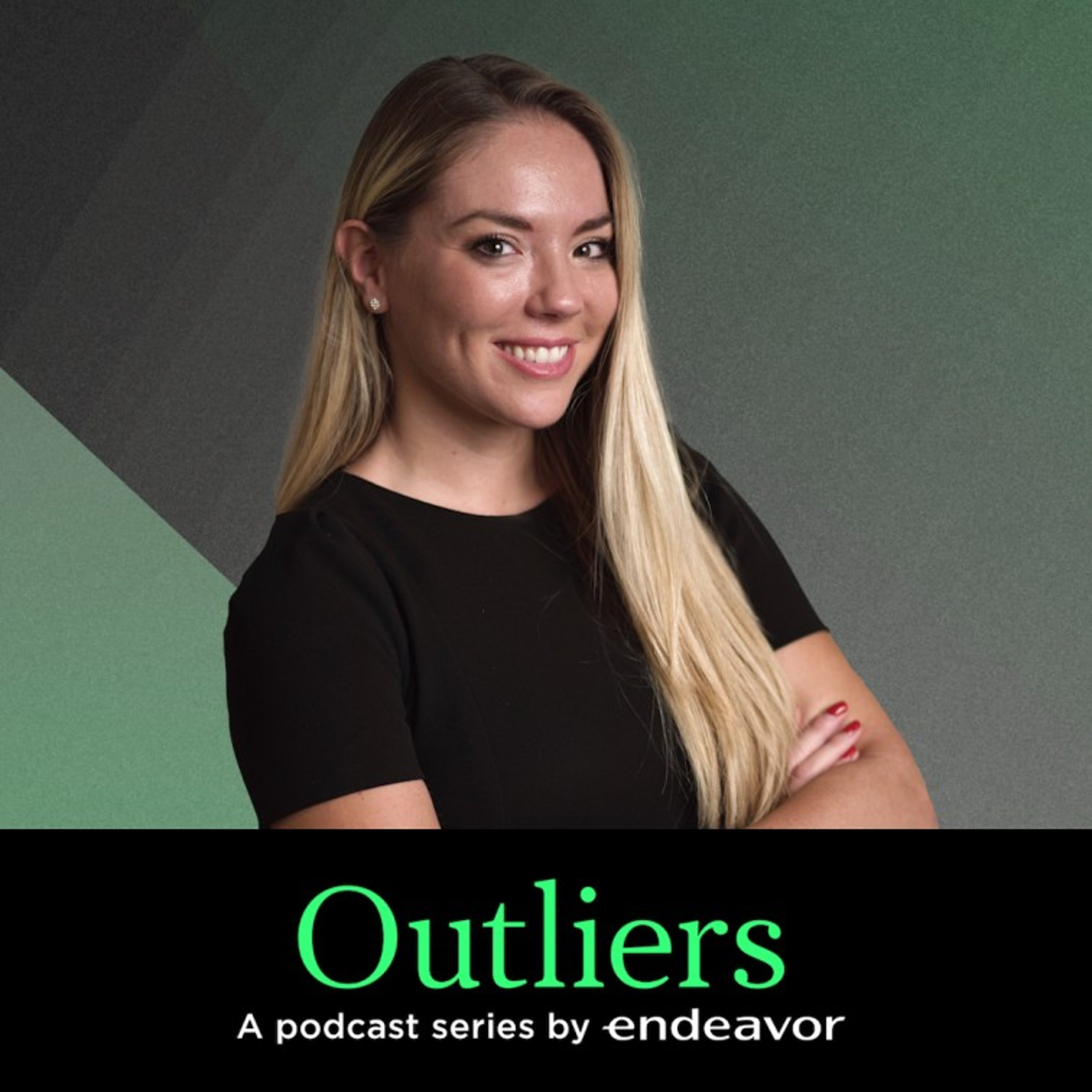


- "What makes an entrepreneur an Outlier?"
- "It’s a mix of madness, hard work, and luck, but I believe what combines these three is the persistence to keep going no matter what happens..."
About the speaker
Eirini Schlosser is the Founder and CEO of Dyania Health, a fast-growing tech company focused on revolutionizing clinical research through AI-driven natural language understanding. Leading a team of NLP Applied Scientists and Physicians, Eirini developed Synapsis AI, a powerful platform designed to streamline and enhance clinical research processes. Synapsis AI's applications include pre-screening electronic medical records for clinical trial eligibility, automating manual chart abstraction, and optimizing real-world data studies, significantly improving efficiency and accuracy in the healthcare space.
As a serial entrepreneur, Eirini transitioned from finance, where she worked on over $60 billion in tech, pharma, and consumer deals at Morgan Stanley, into technology and data science. She previously founded Chuz, an NLP-powered recommendation engine, before launching Dyania Health in 2019.
Eirini’s educational journey has been integral to her success. She holds a Master’s degree from London Business School, a milestone that set the stage for her leadership in the tech space. Additionally, she earned certifications in machine learning from MIT, further honing her technical skills and empowering her to lead innovation at the intersection of AI and life sciences. Her leadership in applying machine learning to clinical research continues to be a force in advancing the healthcare landscape.
Transcript
Panagiotis: Hello Eirini.
Eirini: Hello Panagiotis.
Panagiotis: Thank you for being with us.
Eirini: Thank you very much for having me here.
Panagiotis: Founder of Dyania, Greek word for intellect.
Eirini: Right.
Panagiotis: So, I'm sure we're going to hear a great story, I know unique things happen right now to your company and to you as a founder. What usually helps our listeners is to have a quick introduction of the company.
Eirini: Sure. Dyania is a company which we established at the end of '19, early 2020, a company that started with the purpose of automating the process of reading, essentially, electronic medical records. What does that mean? Usually, doctors, nurses, medical staff in general, should get, at least, each time they read a file 30 minutes to an hour to answer some critical questions they have for that particular patient. And what we have achieved to do is to automate it, do it with artificial intelligence in half a second.
Panagiotis: Okay.
Eirini: We work with hospitals, we don't get the data outside the hospital ever and what is done, basically, is understand the patients' background within a very short period of time, so that we can take advantage of this data to.... Essentially, to inform the doctor to be able to make better decisions for the patient.
Panagiotis: One understands that, how much it all matters, right? All these files and all that data, which... All diseases, the drugs they use, what doesn't work, what works…
Eirini: Exactly, what side effects, what symptoms, the whole progression of patients.... Generally, abroad, this is typed by the doctor within a system to document the entire background. Usually, it’s.... Average for footnoting is 3
5,000 characters, so we're not talking about just a couple of lines. We write the whole background.
Panagiotis: In the minds of all of us now, we can understand the value and importance of taking it all this data, to make use of it, some of them that are possibly still on paper. You will tell us all the wonderful things you're seeing in the field right now, but also how important it is to take all this stuff behind this data…
Eirini: Yes.
Panagiotis: My mind, I don't know, at least, my mind explodes with ideas on how this data can be used.
Eirini: Exactly. For example, if a patient has cancer and has finished with one treatment, has not started the next one, the side effects or any other symptoms he had before starting have resolved and has programmed to go in for an operation, whatever, in 2 weeks. In this window he has a chance to get treatment and that treatment, then, in that window of time, to have the best chance to have good results. If this window is lost and the doctor never finds him, the chance of saving the patient will be lost.
Panagiotis: In 2019 and 2020, you must make a story to present your company, your idea…
Eirini: Yes.
Panagiotis: And to say, what to say about Dyania. So, in '22, Open AI comes out and trains humanity, what are LLMs, what it's all about. How much has it made your story telling easier?
Eirini: They all knew then what the LLM meant and in general, in the industry… Basically, as a problem there was in the market. They knew, many, many companies had tried that failed because the technology did not exist to do it with the right way and there was, somehow, a bad thought about the word natural language processing, especially in the health sector, so, in the beginning, when we were going, they said, "Okay, a lot of companies do it, how are you different?" and now, how to explain to them what large language model means, so, the first part was that suddenly, at leadership level, in hospitals they knew what we were doing at a substantial level. The second is that we were already way ahead of having built a complete system, it wasn't just an experiment where we take Chat GPT and work it out. It was a two-year effort, and suddenly Chat GPT comes out, other companies find out about it and within two months are born new start-ups that had no idea what they were doing, that is, hospitals are not something you do....
Panagiotis: Yes.
Eirini: In an easy way and you don't just do it to make easy money. Yes, it requires years, years of sale cycles… The data is very complicated, it's a difficult market. Without medical knowledge you're not getting anywhere, so, suddenly we had a big diversification from companies that had already started before and knew what was going on, but we also didn't have technical debt. Other companies that started in '15 for example, before there were transformers, had invested in other forms of natural language processing, not large language models and they were found with a lot of technical debt that they had to throw away whatever they had and start all over again. We were lucky that Chat GPT came out when it did. We were ready to scale, and we had the product ready, we had the conversations already with the major hospitals, so we moved on.
Panagiotis: So, so, I'm going to use my Chat GPT training....
Eirini: Yes.
Panagiotis: And I will say what I understand about you is that you are the top one in the world, at this time, machine for a hospital to be able to, a doctor even....
Eirini: The pharmaceuticals…
Panagiotis: The pharmaceuticals…
Eirini: Researchers, basically.
Panagiotis: I would like to hear the whole research part and everybody, all the people behind health science, I would assume, at some point and perhaps and already the patients themselves... To be able to go to this machine, in this technology you've set up and ask what they need to ask and get back one answer which is the result of processing an unimaginable amount of data, right, and it's very much to the point. Whatever you do with Chat GPT, but you are in this field…
Eirini: Right, yes.
Panagiotis: The number one in the world, that's what I understand, and how fantastic, first of all, which this business is a Greek story. Let's take a step back, to listen to some of your story. Where did you start, where were you born? What are the things that you think have played a decisive role in your journey to date?
Eirini: Good. First of all, I was born, and I grew up and studied in America, so, okay, surely I would have done 15,000 mistakes in Greek until now.
Panagiotis: You haven't done any so far.
Eirini: Uh, okay.
Panagiotis: If we were speaking in English, I would have done 20,000, so…
Eirini: It's okay. Actually, my mom is Greek and Greek American, I'm actually of second generation. My mom grew up in a village in Ohio which has the second largest population of Greeks per square mile.
Panagiotis: But Dad isn't, is he Greek?
Eirini: My dad is American, he's actually a Norwegian American from Minnesota. Actually, I was raised in a family by doctors, so it was generally the family business to go to medicine and America there's the…
Panagiotis: Both parents are doctors?
Eirini: The whole family, brothers.... My father is a dentist, and he performs maxillofacial surgeries, all my uncles, orthopedic surgeon, the other one, anesthesiologist, my sister, plastic surgeon, my brother's a maxillofacial surgeon, the others… The black sheep in my family is a pharmacist.
Panagiotis: There is a pharmacist in the family.
Eirini: One cousin of mine, everyone else is a doctor.
Panagiotis: I don't suppose this cousin comes to Thanksgiving dinners.
Eirini: I'm not going.
Panagiotis: Is Mom a doctor?
Eirini: Mom had graduated as a microbiologist and then didn't go into medicine, but yes, she is…
Panagiotis: She is also a professional of the field. So you have all the pressure of the world to be…
Eirini: I was going to go.... Actually, I started biochemistry because in America, in high school you get something called advance placement coursework, so to say, and I had taken all the biochemistry classes already, so I had too much time at the university, it seemed easy to me and with this time we formed a (unintelligible) organization. We were raising money, essentially, from sponsors for sponsorship, we had become and 501(c)(3) that is non
profit.
Panagiotis: Non-profit, exactly.
Eirini: To have students from all universities come twice a year, who were members of the National Hellenic Student Association, and have airline tickets and hotel paid to come to the Conference. And the Conference would be hosted by 3 universities, from various universities in a different city each time. We had reached a level where they were having a competition to see which city will take over next. For example, once, we had it in Boston that was hosted by Harvard, MIT, Tufts, Boston College and Boston University, and there we had mentors, so to say, professionals, teachers, etc.
and we had Michael Dukakis, who had run for President of America. He was a speaker, we were running various programs such as these, we had made the first student exchange among public universities in Greece with American hospitals, sorry, universities. It was a nice experience in general, we had accomplished a lot of things, but that was my first start-up, in fact. We were raising money, and we didn't even have a turnover, nor profit to give, that was on a dream we were raising, somewhere, so that's where I learned to do the raising, somewhere. We had, I mean, in our 18-19 we were raising $80,000 every year, at least.
Panagiotis: Where are you studying?
Eirini: I was at Ohio State University.
Panagiotis: Biochemistry.
Eirini: Biochemistry in the beginning, also I went to Ohio State that was in
state, close by, my parents wouldn't let me go further, I wish I could, but...
Panagiotis: Who was stricter, Mom or Dad?
Eirini: My mom.
Panagiotis: Mom, huh?
Eirini: Yes, it was on the... Οn the Greek side and I was the first daughter, so my sister is the second one, my brother is the young one, so I was the first to leave the house and...
Panagiotis: They're holding you in the state of Ohio...
Eirini: Yes, in the state of Ohio, Ohio State did have the best... It was the best university in Ohio for more... Research and biochemistry that I was going to, for medicine. So, I started, I'd been taking classes since high school, so the truth is that it seemed to me to be quite...
Eirini: Easy.
Panagiotis: Easy at first.
Eirini: So, you're going to Ohio University, you're in biochemistry, but you didn't graduate from biochemistry.
Eirini: Yes, I changed at the last minute because I had gotten into biology and I still didn't like remembering and having to read more, to have to remember by heart what it is to remember. And also, at the same time I was practicing with all my father's friends, in maxillofacial surgery to follow up, and to watch them do the surgeries live, I kept passing out, I also have low blood pressure, so okay, no matter what they do, to give me juice, every morning the room was like this, and bam
Panagiotis: Medicine is a no-go for you.
Eirini: I actually didn't like blood at all, not at all. Also, the mistake is that one time there was surgery where the patient had... He was overweight and they couldn't give him a regular anesthetic and he was moving and as soon as I saw that he was a man moving and they cut there even if the patient doesn't know what's going on, no... It's a no for me. The surgery part after maybe I was thinking about was regular, for another part of medicine, but I was bored with the so-called standard of care, which means that, for good reason medicine, is changing very, very slowly there's a protocol that they follow every day for patients and that it's the same every day, it killed me, it wasn't... I couldn't even do a routine, not to think that there wasn't a new problem to solve, because if we go back to high school, my brain began to function in a state of problem, which means I wake up every day to see what I can solve, and if there's nothing new to solve, if the problem has already been solved 100,000 times, I had no reason, I was incredibly bored. So, I remember it very vividly, I had not discussed it even with my parents, I’m going to my room, turning on my laptop. And in America it's very easy for someone to change orientation in studies with one button and 2 minutes…
Panagiotis: You're changing...
Eirini: I went downstairs, and I told them...
Panagiotis: You change orientation.
Eirini: Financial. What? Finance. What is Finance? Greek parents, now. What are you doing in finance? I don't understand, accountants do math and the financers do not? What is it? Really, those were the type of questions, what I'm going to do. And I had told them I was going to do it as an undergraduate to go to law school there, somehow, they actually didn't know how to deal with all this.
Panagiotis: Firstly, you're the first one since your cousin who was a pharmacist and still...
Eirini: Black sheep of the family.
Panagiotis: You're the first one to go and say I'm not going to be a doctor.
Eirini: Yes, yes.
Panagiotis: A mess.
Eirini: A mess, since when it was somehow changed the last minute from biochemistry, I didn't want to go and become a lawyer. I had a short internship, I didn't like it much, I accidentally made an application for an investment bank in mergers and acquisitions. And they got me and I hadn't even taken my first lesson then for finance, so I didn't know anything, I go to the bank and they give me an offer to return full-time, but I didn't want to stay in Cleveland. Also, I had already thought that, okay, it's my last year, I don't know what I want to do with my life, but I don't know that, if I'm going to go to an investment bank, I want to go to a big sale, in one of the top banks, and I had taken GMAT along with the interview process, because I thought they wouldn't call me, I applied just because, and I say I'm going to go get a master's degree to go after it, so to say. Within 2 days I received a very good GMAT score, plus, they got me to this bank, and I decided to go for a master's degree after so I don't have to go back to the bank after the internship, the summer one.
Panagiotis: Where do you get your master's degree?
Eirini: London Business School.
Panagiotis: Okay.
Eirini: And this was done through a surprise, so to say, because I got accepted to Columbia, which was a 2-year program, SIPA. Fantastic program from an academic point of view, I was generally interested in all of this, but the average age was almost 28 years old, I was 22, I don't know why I was accepted, really, I guess they thought with the student association, that I had some experience that will mean something, but, so to say, I would have graduated in my 23. My fellow students would be 28 with a lot more experience, so competing for jobs afterwards wouldn't make as much sense, but I was thinking about it and I had a fantastic professor at Ohio State then and I said, "I'm very confused, I've been accepted in London Business School, it is one year It's for guys who have just graduated from university, but I've also been accepted to Columbia and it's ivy league, and, and" And he says to me "I don't understand why you're confused." "What do you mean?" I said "You're 22 years old, if you're accepted to Columbia now, don't you think they'll accept you in 10 years? Go to London and have a good time." And I left for London and that's how the first transfer to Europe happened and I studied for a year at London Business School
Panagiotis: After?
Eirini: After, Morgan Stanley I actually went to London Business School knowing that I had this procedure, because I knew at that moment what was going on with the investment banks, I liked M&A very much because I was like a sponge, to find out anything about any company we worked for, and I started interviewing and actually read for interviews and also at that time I had already taken all the courses, so I didn't have to go to MBS classes, and until December I was accepted at Citibank, to (unintelligible) and Morgan Stanley and I went, I ended up at Morgan Stanley.
Panagiotis: In London.
Eirini: In London.
Panagiotis: And so, you start your career in investment banking...
Eirini: Right.
Panagiotis: Which... And even in acquisitions and mergers, right?
Eirini: Right. It was a bit of a kamikaze team.
Panagiotis: It has many benefits, doesn't it? It's a team that makes deals on everything... In all sectors and in all places of the world.
Eirini: From London we ran to Imia, Europe, through the East and Africa, but also when there were cross borders with America and because I had the American citizenship, they were sending me to New York a lot back then, so, I was working with both offices headquarters, but Morgan Stanley had a particular situation where it had an M&A team, mergers and acquisitions, which was general execution, that is, from the moment that one company was almost certain that they will move forward on a deal, they made us run the practical part. Which means that... It was also not industry-specific, while there were in any other bank only industry groups and from the industry group, they would be able to do 2, 3, 4 deals a year with a group of 30 people. But most of the work was around pitching, to present the ideas to the companies and strategy and think of new ideas, but much more industry focused and concentrated, while we were entering a bit like the army, but based on that, we did have to find out in much more detail because it was the practical part, much more excel modeling and we had to find out more about a company, compared to the CEO of that company, when...
Panagiotis: Did this experience help you at all?
Eirini: Yes, it helped me a lot to think about what economic value and synergies mean. That is, being able to see puzzle pieces and how together 1+1 equals 3 is a talent that I had developed at Morgan Stanley. Because that's what we did, partnerships and acquisitions, where there was an opportunity to develop something much bigger than one company would be individually.
Panagiotis: Apart from that I see a lot of industries I know how to recognize opportunities and what creates value.
Eirini: Yes.
Panagiotis: I see dreams that the owner of a company may not see, which is fantastic, I experience it a lot and within Endeavor I know very much the value and beauty to deal with straws in one morning and in the evening with LLMs in electronics records.
Eirini: They left me a lot of things, yes. One is also very important and I don't know, I'm not sure I'd wish it for anyone to pass it when it's 1-2 o'clock at night, and you're like, "How am I going to finish something so I can sleep for four hours?" you're forced to create a way which will be both right and fast. That is, to think out of the box completely, to get a result which you will be able to confirm then and in the right way, the long term, but somehow be in the ballpark range that it's almost there and go to sleep. And the way this can be done is also by... That's basically where I learned to code with Visual Basic for macros, to run things in Excel so I can sleep. I learned things that if I hadn't had to do it for the sake of survival of situations, I would never have known.
Panagiotis: You have 30 people, a team that is rising constantly in headcount and you're a person who's got a lot of thrashing and right now we're in a phase where the whole culture is, to me, very right, more oriented towards life-work balance, but at the same time I think that when there is an absolute tendency and this is the first priority when you go to work, your balance, and that alone is the way that you evaluate and make the day, I think you're missing a little bit of the magic you describe, in difficulties you build your character, in difficulties you find new solutions, in difficulties you have this growth.
Eirini: When you have a mission and the guys have a very strong exposure, that is, we have doctors in Greece that have graduated 3 years ago and will present to the (unintelligible). This guy will not sleep until... He won't sleep for 2 weeks, until he publishes it.
Panagiotis: Yes.
Eirini: Just that is because we have it in Greek culture. Also, that is, it starts from the national exams up, that is, excellence is the priority. We are interviewing to find these clues that the guys care for their job, that it's not just go there, get paid, go home.
Panagiotis: Do you have a hard time finding guys who are mission driven and have a great sense of responsibility?
Eirini: No, in the sense that we're interviewing for it, we give them case studies to work at home and they do have to show how much they want the job. The case study is like a project that they will do their research, prepare and present to our team to be hired and we're doing that for all the positions at Dyania but, it's not a question of whether they're going to work too much. Yeah, I wish we had the work-life balance, but the truth is we couldn’t do what we do if it's not a life goal, so the team is a little bit of a... Actually, it's a team, they all are, how to tell you, we make phone calls with America at 11:00 pm Greece time, fill cups with red wine and it looks like coffee to the other guy who's on Zoom, so we work together, it's not, we are day and night together usually traveling, especially, the hard part will be as we get older to keep this going, but the way we do it is with family dinners, i.e. family lunches. Each day, we all eat together and also, I'm doing the last interview for each person we hire, which I want to continue, at least until we are at 1,000 people, because otherwise I will come unstuck with those who are hired, who's leaving and one last thing check that he's a good person, somehow...
Panagiotis: Good fit with the culture...
Eirini: Good fit, yeah. Good fit, yeah.
Panagiotis: What are you looking at in the last interview?
Eirini: I usually want them to tell me about themselves, but I want to understand more why they wake up every morning. If they don't have an alarm clock, why do they get out of bed, to go and do what? What excites them? I want to see the most authentic thing come out of them and figure out if that's what fits. If they don't care about anything, they don't fit us. That's it. And the second is that I look to see if he's a good person, that is, how he makes decisions.
Panagiotis: After Morgan Stanley.
Eirini: Yes.
Panagiotis: Are you in London? We are still there in London, at Morgan Stanley. What else is involved before you start Dyania? You start another start-up.
Eirini: Yes, I started my first start-up, if we say it in terms of...
Panagiotis: After the student body, you start...
Eirini: Exactly, why did I start it? In Morgan, because we were working with different industries, the one branch that I liked very much, and somehow, not somehow, I had changed team to do this, was the technology and more consumer and then I started working on some other projects on the side, because then, every analyst may have had M&A projects, which again is a lot, i.e. usually an analyst may have had, at most. We had then 5 though and one of those was Net-a-Porter which was a merger with Yoox and it was one of the biggest tech-ish e-commerce fashion ever then and it was to be a merger equally, a billion and a billion valuation. We were working for the founder, Natalie Massenet, we were basically helping her prove that the valuation of the company should actually be 5 billions and win it, because minority investors wanted to sell it for 1 billion, while she should have been going after it for 5. It was a very interesting deal because to support the valuation of the company they wanted to launch the application called "Net Set" so that someone can take a picture and buy the products that are (unintelligible) anyway, they didn't have enough teams to run it and they put me, the analyst, in there running around doing the launch with them and I was a bit more operational in... And I loved the tech field. So, I had already learned to code in terms of Visual Basic and stuff, but nothing serious. And it was a very specific moment in the room where Natalie Massenet was at one end and the managing director (unintelligible) at the other end of the table and I was thinking there, the familiar question of who I want to be in years?
Panagiotis: On which side of the table...
Eirini: It wasn't, yes... It was on the founder's side. And then I started to moonlight my first company and I had thought about it because I realized that huge companies were making decisions without the facts, so, we were working with Diageo at the time, which is, they have alcohol and drinks and they were doing micro-city launches to understand people's taste, if they will like a new drink and then they had done something called "beerarita", margarita with beer. And I realized that there were too many data in reviews of restaurants, bars etc. on Yelp, Google and Facebook reviews and my first company was to create a way to read these reviews, that was before the Natural Language Processing, by the way, to read these reviews, to relate the taste of the people with... Even with menu options, i.e. be able to do thumbs-up, thumbs-down or I had thought of it as Spotify, where to go. Generally, the average American goes out to eat not even once a month and usually once a month he will go to the same, so, in general it was a very small market. That's fantastic technology we learned, was the largest school on how to have a start-up, we launched in London, I had left Morgan Stanley when I did a beta party with the first launch. Okay, it took me three months to sleep hours a day until I recovered, and I left London for a 3-week trip, weeks to see if I could raise money in America and I had meetings. I had meetings with investors, and I thought it was okay with my background, what to say to me, I don't know? So, the other guys are raising money and they're 22-year-old college kids, what's going on?
Panagiotis: This is easy.
Eirini: And I arrived in America, and I went to San Francisco and I had a mentor, a friend, I don't know what to call it, who was at Ohio State with me, in the same path, Peter Michaelides, Greek American, and he's from Ohio. On my way back from London, after years, had left Harvard, had started his second company, sold it for a good exit, i.e. start-ups in Silicon Valley, and he was the only man with his wife that I knew in Silicon Valley, so I'm going there. I'm now a twenty-five-year-old kid on their couch to help me meet people. I still had a flat in London and everything I had saved from Morgan Stanley was there and I was paying engineers in Greece out of my own pocket, the only good thing is that the pound was 1,62 to the dollar, so I had saved money in pounds, so the dollar was much lower and that money was more than enough from my two years as an analyst, but it's not like I had to stay, and my parents were like, "well, sweetheart, you quit medicine, you got a good job that we understood was a very good job, you were paid well and now you quit again to be what?" Listen to my mother to say "entrepreneur"? And I was actually saying "yes, that's what I'm going to do, so, okay, you don't understand it." but she says, "If you don't have money, you can go home, we give you nothing." So I was, okay, totally boot-strapping. Peter Michaelides, then, and his wife saved me, also my father gave me some money, he gave me 10.000 $, and then he says to me, "I give you this, but you should know that Henry Ford failed times before he had a hit, so I'm pretty sure this will fail, just remember that, this is the last money that I will give you." I said "but it's not a sponsorship, I'll give you the money back, I will make an entity" I insisted. In hindsight, it is very funny because, okay, sometimes, not sometimes, and I believe it that in my first company now it's not that I would invest in me at the age of to expect to make some money. It is sponsorship at this level and it's not to say people should not get into entrepreneurship, but it's the sponsorship for someone to go through this school for the second company to succeed and I did have other investors, angels, who gave me some money, and Peter Michaelides invested and another 2-3. For me, the lesson in the first company is that there are times that no matter how hard you work no matter how hard you try, if luck is not with you or if you haven't got enough thrashing to predict what can go wrong, if it's not the right timing in the market, no matter how hard you work, it fails.
Panagiotis: Let me tell you something else that I see in this story that I think is equally important and beautiful for what is happening in the American market. We have done a survey, and we have got unicorn founders, and we captured their whole life up to the moment, until the moment they decide to start the company that will make them billionaires. Not after, before. Where they studied, where they went and a lot of this is also the... The conversations we have on the podcasts. Because I think they're sending out good messages to the rest of the market. One of the most basic learnings of this research, which is very, very nice research, "Founder Pathways" by Endeavor, is that most founders, we are now talking about 60% of the founders have started, 70%, sorry, 70%, they have either started start-ups before and these start-ups have failed or they have gone to work for other start-ups, before starting the start-up that will make them billionaires, this, I notice how beautiful it is to put people, to choose to invest and support you, knowing not that you will fail, that is the condition to achieve the next one. The start-up what did you call that?
Eirini: Choose.
Panagiotis: Choose, where to go, where to go for a drink, etc. And so, I started to see that it was going to be very expensive, first, to launch a new application in a city, second, have the restaurants pay us because they were opening and closing, so there was a huge problem with needing to have a large salesforce, selling in restaurants and the big cities being shut down every 6 months, many times, so the users themselves did not have great incentive to pay every month. So, we realized there that it was a cash flow problem, if we kept doing it. Then I started to say okay, okay, that's enough, we need to start making money and I started doing... I started to join Upwork and to advise fund companies, start-ups for their technologies, etc., and anyway, in it I had a partnership with a fund which believed in me, and they started sending me to Dubai.
Panagiotis: Upwork, to say here, is a platform for freelancers...
Eirini: Right. Essentially offering their services per hour or contracted to companies. It was life-changing for me because I could do... I still had in my mind then that I was still running Choose in parallel, I just had to put some money in, but through Upwork, other opportunities were found. That is, a fund, basically, they took me full-time, and they'd send me to the Emirates to talk to (unintelligible) and within 2-3 months, that was in ‘17? I think so. I had built a relationship with one family, Nayan, and I had made them... Many times, I was brought for meetings to advise their strategies for investments in companies. In general, also from the various advisers and the whole thing that we were running was also in health care, because it was easier for me. I had investors who were doctors and so on, so it was the easy, low-hanging fruit, so to say. I had some investors that had hospitals, who had come to ask me what I believe about the value of medical data, because there was about to be a takeover and there was a takeover basically from Opteon, which is owned by United House, the big insurance company, to buy their hospital and they didn't know how to value, how to make the valuation of medical data for clinical research purposes. And I started to get into that thought, I started to get a little...
Panagiotis: The thought got in.
Eirini: The thought got in and I wanted to get back into entrepreneurship, so, there was this one I thought, that I had already started working it out in my head, was how we could invest both data and money in start-ups, in funds. So, I got this idea on which I was working. Anyway, I built it into a website in weeks, did a presentation and I am off to Dubai. Anyway, on 13 August, from 15 July, we had gotten to sign, to invest $60 million in me. And a new path begins, and this path was surreal, so to speak, I understood that it is more in the Arab country to work slower. Sometimes they have distractions which take them in different directions, and essentially what happened is that I figured it out faster that I wanted to take advantage of the data for my start-up. From actually wanting and sending money. I figured there would be great value of all this in the AI part, so, that was the transition to Dyania. That was in '19 and I had all these, all these ideas in my head and I went to a friend who was a venture capital fund, he had never invested in me but we knew each other at conferences, we did (unintelligible) together, etc. And I said, "Alex, what do you think about this?" It's Alex Rubalcava, he is from Stage Ventures in Los Angeles. "I don't know, do you think it makes sense?" He looks at the deck, he says "Have you shown it to anyone else?" I say "no, I wanted to get your opinion." He says, "You got your lead." I said, "What do you mean?" "I'm going to invest in it." "But I haven't done anything." "Do it." Pre-seed fund, out of the gate, we hadn't done anything. And that was the end of November, the round closed January '20 and we started with Dyania and it was to automate the reading of medical records, so, that hasn't changed. The use in the beginning was for clinical studies to find patients and now it's this and so many things, because it is the same technology that can be used and be applied everywhere, it's a bit like... I now call it a tap, the water that comes out can boil an egg and water the plant.
Panagiotis: I understand that the original idea, the identification of the problem and its size, perhaps the first connections with market people have emerged from your journey through in the field of investment banking and especially from the fund you already set up in the United Arab Emirates. How do you get into the process, though? You recognize the problem is a big one, it is perfect, it has a chance, it is indeed the right time to go there. You have the experience from previous start-ups, but how do you start to develop technology for something so particularly difficult?
Eirini: Firstly, and by then, I actually had, we had learned quite a bit of code. I knew Python, so I knew the first one version, anyway, I had set it up on my own before I actually hired anyone, so there was an MVP and then it was still in an initial... It wasn't like a first thought, because I knew from my first company the Natural Language Processing of the previous generation, so, I started getting more involved in investigations to understand what happens in the track of large language models with transfarmers etc. and somehow I knew the shift that we had to do, but in the middle of all that was the pandemic, that is, all the hospitals were closed. In general, my first thought was that I wanted to build something which links medical knowledge with engineering and technological capability, and I could see that those two in terms of connections were not there. I mean, I didn't see it from other companies in the market. They had a team of engineers, and they would go and try to do a job. Okay, it all became much more limited with the pandemic, in general. First of all, I was trying to think after my first set-up, what data we needed and how to make this data so that an algorithm can be trained, anyway. We were trying, when we left the office, to build my own house in a half office, half home, basically, so that everyone can come home at least, and have a kind of... All of us, there were four of us...
Panagiotis: Four people.
Eirini: Four people. And also, we couldn't test anything. There were no hospitals, they did nothing, except just to cure the covid. Good thing we didn't get in the process to try to do, to target our work to help the coronavirus and the pandemic, those who tried this, did not recover afterwards, think we would have... It was another technology that had to be done, there was no computing power fast enough to capture the features of the patients because within three hours they were going from not being able to breathe and then had multi-organ failure. This three-hour period no artificial intelligence could capture it, in one hospital. So, because there was no GPU computing power, there was no infrastructure in the hospital. So, we stuck with the original idea, and we were trying to build as much as we could, we went through several, okay, and people in the group have personal things to go through, but to try to lead a remote team in the first few months of existence, to have just gotten investor funding...
Panagiotis: And with hospitals...
Eirini: And with hospitals that were open before the pandemic suddenly, I couldn't find anyone, I almost went crazy, I say "what am I going to do?" And it was just to cut costs, until July, I was ready to swim back to Greece, where again to recall, I didn't have a passport because my parents had never believed that I would go to Greece for any reason other than holidays. And then the borders were closed, and the Americans couldn't go to Europe. And I got a document from the ambassador, from the consul of Los Angeles that said, and it was true, I was going in Greece for medical research purposes, and they didn't believe it at the airline where I had gone to check in.
Panagiotis: At the airport?
Eirini: At the airport. And basically, it was 7 am, Friday morning, on a Friday, 25 July, and they were calling to get to find someone in the Greek consulate in Los Angeles.
Panagiotis: To confirm that you're going for medical research.
Eirini: That the document is genuine to go to Greece because the consul had signed 4 letters, so people can leave, because all Greek Americans wanted to go and had no other way, if they didn't have the letter because things were open in Greece at that time, so they were all trying to find any reason. My grandfather has this, my aunt needs help, to leave America because it was a war situation, I mean, in Los Angeles, they were burning down our offices, earthquakes, fires, American army descended on the city, it's there were... We talked about one dimension and many more, I was never traumatized. I've been traumatized since the pandemic in L.A. I arrived in Greece, and I was watching fire, I couldn't sleep at night, on an island, I could see where it was, is close, I can't sleep, so I was... That way, yes. And I think a lot of people went through traumatic situations, but I don't know. I’m a person… I like to do things if you cut off my ability to do things, to wake up and if the day has been successful, yeah, to be creative, it's like...
Panagiotis: Someone cutting off your oxygen.
Eirini: Exactly, exactly. And I arrived in Greece, and I realized or rather remembered then that the doctors usually have to wait until they start their specialty and then we had my brother intern that summer to produce medical data, but my brother was in medicine in America, where he only had the one summer. After that, he had clinics, he would have the specialty. I mean, I knew that doctors in America could never to do this full-time and we wanted a full-time team, working on it and I get to Greece, and we hire our first doctor. We opened an office and started to build the medical team.
Panagiotis: So, you find… In Greece there is a distance between the degree and the specialty that doctors will adhere to, and they have a year off. And you start calling doctors and you get them to do what exactly? Explain.
Eirini: Right. We had a big one, a large database of files from the consultant doctors that we had in America.
Panagiotis: Yes.
Eirini: And they were sending us their patient files and we'd give the envelopes to doctors in Greece to read them and write the answer to the questions which were important to teach the artificial intelligence answering questions like that, that is, they were making samples for artificial intelligence training. If we say that the Greek doctor, the doctor will have the medical knowledge to draw the right conclusion, the right is of the man, and we use the human result to train artificial intelligence.
Panagiotis: So, with real medical files, whom you find because you have a board and medical consultants who have access to these files, you're taking anonymous...
Eirini: Yes. It was before they knew the value of data in America, which means that now there wouldn't be this opportunity.
Panagiotis: Yes. So, you train, you start and train your model with doctors by actually reading case studies of patients you have. Fantastic.
Eirini: Right. And it was a big...
Panagiotis: Which I imagine is still running. So, that's what you're still doing.
Eirini: Yes, yes, the medical team does so much more. In this process we started to build a mathematical group in America by AI Researchers where they had experience and they were some of the few in the world who had experience with Large Language Models, in the beginning, and even in 2022, if we start there from Chat GPT to Open AI, there were about 2,000 people worldwide who have had this experience. And we were only looking for them and then one, Weiqi is called, a Chinese man running our AI Research team, began to build and teach the new hires, anyway, who might have been fantastic in college, but it's not like they had too much experience, while Weiqi was... Physics Olympiad, then he was... He was sending rocket ships on Mars...
Panagiotis: How many case studies do you have... And I don't know if there's anything else which now makes your model get trained but how many case studies have you processed so far?
Eirini: We train, we do the training of our Synapsis AI, as a doctor would have been trained, that is, we start with continual pretraining, it's called, that reads medical books, up-to-date scientific articles, i.e. it has the content of the medicine and learns from there.
Panagiotis: The fundamentals.
Eirini: Yes. And beyond what it would have already had in pretraining at a foundational level, we put more and more information. For example, the field of medicine has a lot of information which appears in pictures and shapes. This figure must be changed to a description so that artificial intelligence can retrieve it which is for free text, for example, to be trained by it. So we start with anything that somehow if we feed text into AI and we give it a medical degree, then the cases are like going through a specialty, and we have indeed trained it, we call it AI residency and for a disease area there were 10,000 samples, it is a specialty, so in oncology we did 10,000 samples, in cardiology 10,000 samples and we're moving to a...
Panagiotis: How many specialty areas does Synapsis AI have?
Eirini: It has many.
Panagiotis: You go to each specialty, and you work with the clinic which is expert on this or are you working...
Eirini: No. We hired Greek doctors who had already completed their specialty. Or they had already done that.
Panagiotis: So why?
Eirini: Because of the neurological ones in particular... Because we didn't, we didn't happen to have someone in Greece who had a neurological background, but also neurology is very subjective, as a branch.
Panagiotis: More difficult.
Eirini: Also, medicine is difficult, the subject of medicine. Many times, the doctor can understand a phrase very differently from other doctors next door, i.e. symptomatic heart failure, that the patient is symptomatic. What does this mean? Exercising tolerance, that he cannot do sports, that he can't breathe, heart palpitations, I don't know how to explain it in Greek, tachycardia, I think. All these symptoms can mean something to one doctor and the other may say no, he has not symptomatic heart failure with this. It's very, very subjective. So, if the protocol isn't clear and what each means, how to train it one into a doctor, to artificial intelligence, to be able to draw a conclusion that doctors will agree that in conclusion is correct? The way we do it is to have consensus by many doctors, who agree with each other, but even in how we define the question it must have already been agreed by the doctor who is in the client, and many times, doctors to clients who are in hospitals disagree with each other and they say "fine, you will decide what you want us to find, clearly, objectively, what you want, do you want the patient to be unable to breathe or to have tachycardia? Agree with each other and then tell us and we're going to find the evidence that exists. If we say the expression "needles in the haystack", we use artificial intelligence to find the needles that are there. If there are none, we can't fix it, we can't assume. So, we're very clear about what we are doing, and what we don't do, if we are to draw a conclusion which has to do with diagnosis or make a decision for the treatment of patients, this is considered medical advice, and it needs FDA and EMA approval. We don't do that. But we give it all the data to the doctor, all conclusions, so the doctor himself can decide what is best for the doctor, for the patient. This is how AI training is done, but it's a very complex industry.
Panagiotis: You ran a contest, you put two nurses...
Eirini: Reading the files...
Panagiotis: Reading case studies, reading patient records, patient files...
Eirini: Files, yes.
Panagiotis: And you put Synapsis.
Eirini: And to answer some questions, as we gave the questions and the answers to the questions to be compared with our Synapsis AI.
Panagiotis: Excuse me, in speed, in quality and...
Eirini: Both in speed and in accuracy if the answers are correct...
Panagiotis: And what was the result...
Eirini: We are over 90% and we did it in a few seconds and the nurses get a week and a half, they take three notes an hour. In time, we knew we would win, this was no surprise, but in accuracy, how correct the technology is... We knew because we had the doctors internally to compare with our own doctors, but we wanted a stamp from an external customer who is... okay, the Cleveland Clinic is the number one hospital in the world, so it means a lot when it comes out and says that Dyania is working and here it is our partner for anything AI...
Panagiotis: I think it would be useful to understand a bit about who your customers are and how you serve each customer, that is what, what is the solution for each customer, and as I see your site a bit, you present areas, categories of customers, the clinics, the pharmaceuticals and the patients themselves. Help us understand a little bit...
Eirini: We don't see patients as customers, they're... They just have the greatest benefits at the end of the day, because right now, especially for diseases that the patient may have no choice, may not have alternative treatments, because they don't exist, they haven't been approved, and they're looking for clinical trials and this is for many diseases, for many cancers, for several diseases in the world that there just isn't a cure that is successful. The patient, if he has no other choice, will be looking to participate in a study, but the clinical trials have certain eligibility criteria, that many times he must have already been through a series of pharmacists, that is 30-40 criteria for participation in a study. And usually, it's that it must have been x, y, or a, b, c but no d yet. And this window of time is critical to the patient, because, if he misses it, he misses the opportunity for this specific drug. Patients usually... First of all, they don't usually have the file in their hands so they can read it themselves and try to make sense of their data. But even if they had the file in their hands, they would not have the medical knowledge to draw the right conclusion and they wouldn't have a database to find the clinical studies, so they don't know what the alternatives are, they don't know where to start. They go to their own doctor, who usually does not run studies, i.e. only 2% of doctors in America are running clinical trials, which means that most they don't have...
Panagiotis: Access...
Eirini: Access to anything and indeed there is a huge part that... The problem with clinical studies is that doctors don't know about other doctors what studies they have if they could send their own doctor, patient to another doctor, they could if there was a system of finding and matching, essentially, to match the patient to the right study at the right time, but all that doesn't exist, so what does the doctor do now? Who also wants to find the patient. He waits every day, and he says, "is my patient coming in today? Who has the criteria to participate in my study?" And he waits for 2 years.
Panagiotis: Yes.
Eirini: It's a huge problem in field of clinical study, because we're talking about a drug, it takes 2 years for each phase, 4 phases, almost a decade until a drug is on the market, so that's a problem for patients who can't get a better drug. It's a problem for doctors who can't treat the patient properly, they lose the ability to have economic benefits and get paid by the pharmaceutical companies. Because we are talking about studies which are all funded. There's funding from pharmaceutical companies, so the doctors want at some point to be paid and for the work they're trying to do to save the patients and be motivated to work on more studies. And indeed, the hospital also has benefits and economical and with better results for patients, so generally there is a common win-win-win motive and for pharmaceuticals, hospitals and patients. Patients will have better treatment, doctors also have economic benefits and provide better treatments and hospitals have both, and the pharmaceuticals themselves manage to run the studies.
Panagiotis: And I will say here, first of all, congratulations, because you've built and just now an investment has been announced, not just a partnership but also a strategic investment from the Cleveland Clinic.
Eirini: Right.
Panagiotis: Congratulations.
Eirini: Thank you.
Panagiotis: Help us understand a little bit why this is important.
Eirini: First of all, the Cleveland Clinic is the number one hospital in the world, has surpassed even the Mayo Clinic and other huge academic centers worldwide...
Panagiotis: It's number one in the world.
Eirini: It's number one in the world. And in general, they run 3,000 studies every year; it has 4.7 million patients, and it is in 4 countries. It's in the Emirates, in England, in America, in Canada and have partner hospitals in hundreds of other countries in the world, so we're talking for a huge organization. We essentially get (unintelligible), email, everything of Cleveland Clinic to work like we're employees of the Cleveland Clinic, so we had the medical team in Greece running at the Cleveland Clinic and write protocols for the doctors there, and we're talking about top doctors, so the guys here participate in publications to which they would not have this access. So, if we go back to how we build the team and what motivates everyone, it is that they're working with the best on the planet.
Panagiotis: Researchers and doctors on the planet.
Eirini: Exactly.
Panagiotis: I can't remember if they're working...
Eirini: They are in active cooperation, yes. And when they ask the doctors at the Cleveland Clinic, they want to work with us is because... They talk about the doctors there, the medical talent and how much they work, how well the AI works, which is for the AI research team, but what they don't know, that's behind all this, is the "plumbing", in essence, that we have to connect each piece of data, the database between them and run the whole system from the beginning to the end and the engineering team runs it. So, it's the groups that are working together quite actively to deliver a product and we built... The whole concept of the company was to be able to get a result by multidisciplinary, I don't know what the word is, but multidisciplinary sources of people, that is to have technological, mathematical and medical knowledge and link them up to have a...
Panagiotis: A multifaceted effect.
Eirini: Yes, exactly. That's why in Cleveland Clinic they like to work with us, and I think that's... It says a lot about the guys in Greece that, okay, get messages from nurses in the Clinic asking for more studies, and "when will you be able to do mine"? That is, there is a demand. And that's just one part of how we work. Also, each hospital must do reporting and fill in forms for the results of their medical services and, essentially, in every institute, for example, oncology institute, cardiology institute etc. they have about people just sitting there reading the files to fill in forms. We do this too, easily with the same technology, it has already been deployed, so we generally have 3,4,5 sources or product types, let's put it this way, from one technology.
Panagiotis: They are becoming your investors and your strategies; this is your series A. I want you to tell us a little bit more about the characteristics of this round.
Eirini: Yes.
Panagiotis: So far you have raised, I think...
Eirini: Now, 20 million.
Panagiotis: In total.
Eirini: Our series A was 10, our lead was HealthX Ventures who are in America together with Tech Square Ventures from Atlanta and Cleveland Clinic.
Panagiotis: Fantastic.
Eirini: We basically had an oversubscribed round, I mean, they wanted... And we've had participation from our existing investors that they had invested in previous rounds, they wanted to put more money and it was a very important moment, I think, of the company, when we realized that the target was not the investment and in fact we didn't want to have this goal, is to offer AI as a service, to be paid for our work and not to get money by giving away shares in the company. It's a very strategic change that not all start-ups do, I think. But if we're going to raise another round in Β series and when we're likely to raise it will be because we want to grow up much more. That, so that was the moment when, for example, with Cleveland Clinic, because okay, they have... They make decisions for investments once a quarter. We had to wait a while to get on the same schedule with the other investors in Α series, so there was the delay in the announcement of the round and we were getting to the end and I said to them that "okay, the truth is that we don't care if you invest or not, you may or may not invest.
Panagiotis: We want to work with you.
Eirini: We want to keep working together. We know that doctors... Because it's complicated, it is a huge organization, it has 100,000 people, employees. We knew we were going to have a power of support from medical staff that had cooperated with us and demanded that it continue to spread, so we knew that this it was going to happen anyway, and it was already done, we had run several projects, so, we wanted the client, we didn't want the investor, and we said, "Okay, if it's not in the terms and time window that we now have for you to invest or else... We're OK not to invest and we have other people who are ready to put in the same money tomorrow, so we don't need the money.
Panagiotis: But they put the money, I think they're smart to come, to see the opportunity here not only in technology, but also the investment itself. Tell us a bit, what are the next bets, that is, at this moment you've reached a group of people, you have the best clinic in the world, not just your client, but also your investor, which it is, I think, a second badge of honor on the way in which you create value for your customers. The world is ahead, you have a head start. How do you scale and I want you to put the competition factor into it.
Eirini: The last one is the easiest because from the moment since the publication of Chat GPT, this happens all the time, and as we went along and we had built a loyalty, anyway, from Cleveland Clinic and from other hospitals, the more often it happened that we were the first call, that is, one company appeared, bam! Eirini. Can you do this? If we can do it, we say yes, and then okay, if the other company has pitched them… The truth is that beyond that, the new companies, if you haven't invested so many years in both technology and data and if you haven't thought of all the pieces, it's impossible, I mean, to start it, we know what we've done and we know how hard it's been and we know what intellectual property we have with the group now, even in the fact that we're in the Cleveland Clinic, it didn't happen because we started a partnership with a doctor. It happened because we set a goal that we would go to the decision makers. In January of '23 I had a minute meeting walking from patient to patient with the chief research informatics officer of the Cleveland Clinic, who in these ten minutes, said "I've heard it 15 times. What do you do differently?", and somehow was convinced and started from there, but the chief research informatics officer was the reason we are where we are now. If someone does not have C and I in their title, we say no to a meeting. At the end of the day, someone must be a decision maker, and we had the whole strategy in place that we can clearly see is working, when we have CIO, CMO, CRO, it's a semester, when we don't have...
Panagiotis: It's a year.
Eirini: A year.
Panagiotis: And maybe even more.
Eirini: That, so we're very specific that we don't sell Toyota, we sell Maserati, so we go to the decision maker, in the top hospitals, and this is the beginning and that will be for next year, the top hospitals are the ones that have over 3 million patients, they run over 3,000 studies, more than 1,500 studies a year and have internal GPU computing power to support in terms of infrastructure, to support our technology. If they do not meet these criteria we cannot cooperate, because it will take 2, 3, 5 years. It's better to have completed a technological overhaul, so to say, let's put it this way, and then talk to us, or we don't take it on as a job.
Panagiotis: For the Alzheimer's and Parkinson's neurological diseases you're working on right now...
Eirini: Yes.
Panagiotis: In the specialty branch in quotes...
Eirini: This is new, we're already working, which is what we did with Cleveland Clinic was oncology and cardiology, we also have a cooperation that I hadn't said until now, with the New York University, NYU Langone Medical Center which is also half and half cardiology and oncology...
Panagiotis: Wonderful.
Eirini: Johns Hopkins is with transplant...
Panagiotis: OK.
Eirini: And some other hospitals which are more...
Panagiotis: You now have the neurological...
Eirini: We will do extra specialty in artificial intelligence, working with the Cleveland Clinic, and with the neurological team.
Panagiotis: What else is ahead? Is there something else now, some specialty that...
Eirini: Yes. The truth is that in most diseases, it's going well, we don't just have... Actually, we haven't covered psychiatry at all which is very, very difficult because it's too subjective that the doctor will state for the patient and for us, it is not our goal right now, we are not made to assume something subjective. We want it to be stated clearly and even with clear language it's hard to get any conclusion, but that's it. I think the next frontier are psychiatric or even more vague things. In terms of technology. Then how we scale is, okay, we recruit as quickly as possible and the (unintelligible) will be for the hospitals, computing infrastructure, i.e. how much infrastructure they will have for GPU, and we think about the future, we're starting to make it a solution for them to have, when we don't use it. We have bought ours for a year now more than one, almost 2 years, we just bought another GPU, but it's because we've maxed out in our own computing power for our own training, so when we have... Probably after B series, we'll start to have extra to offer it as extra service to be able to become an...
Panagiotis: Integrated solution.
Eirini: Integrated solution for hospitals that do not have computational infrastructure inside the hospital already, so yes, we start with the top ones, for example, and we move to expansion.
Panagiotis: Well, Eirini, we'll play a game now.
Eirini: Good.
Panagiotis: I'll give you a card, you will pick a card, which has words in it.
Eirini: Good.
Panagiotis: And I'd like you to tell us your definition of that word. Let's see.
Eirini: Good. Leadership.
Panagiotis: Leadership.
Eirini: For me leadership is generally when I'm in the trenches with the team, doing from the hardest jobs with them to the easiest, and I think that this necessarily has to change over time, with the level of the company, because I can't be with them doing everything, because there is no time, but so far it's been about building a situation that not everyone was afraid to do something that was without a confirmation that a result will be obtained, i.e. that it is OK to fail, and pass challenges to show the team, that it was OK to pass these difficulties, I passed the challenges with them, so that was it for me, that was leadership, and I think that at the next stage it's going to be very difficult to do that because I like to build, I love creating and I love being in the weeds and when I have to zoom out and to be with investors or with clients and, well, with clients when, my favorite clients are the doctors we will build a live protocol, but that shouldn't be... After a certain point I can't go on with my work, so for me, that's why it's a difficult word because it shapes and will shape what it means to me and to Dyania in the coming years and we'll see. But so far it means that I'm with the team and we were all building together.
Panagiotis: Late nights together and... Hard work and that thrill of the job.
Eirini: Exactly, yes. And I think that had a great effect on inspiration and seeing the vision and why we are here.
Panagiotis: I know you're recently married. Congratulations.
Eirini: Thank you very much.
Panagiotis: Same here. Beyond the scale of a company, we grow up, things change what do you call it... A person's roles change. How do you feel the role of a leader needs to change? How do you build your team to be ready for... Be there in the morning, in the race without you being there until 4 o’ clock in the morning?
Eirini: Basically, it's two things and until very recently I hadn't seen any role model at this level, to understand how it is done at scale. In fact, I had one role model that and I think it's a measure in Endeavor, you have various partnerships. Athina Theodorou who was at Morgan Stanley with me, and I watched Athina have fantastic children being a mom and she's killing it in managing director level in an investment bank and working all those hours. I hadn't seen it in the entrepreneurship sector, from a start-up, entrepreneurship point of view, until recently I couldn't see any light in the tunnel, that it wouldn't be viable for a baby to be born with my program right now, that is I wouldn't... I'd feel sorry for the kid, it can't be done, and it is necessary. Now, at some point this will change and depending on... I'm actually building right now, regardless of if and when and what will be done with marital status, because I want to have the infrastructure to concentrate on the most vision part and not on the details. That means I'm becoming much more selective in how I spend my time and where and recently I had a conversation with an acquaintance, so to say, in a group, explaining how from the moment she became a mother she was much more focused to solve things much faster so she can get through the day and see her kid and not be... Just be gone all day, so she was much more productive in a shorter time to produce the same things, and, not only has she not changed how productive she was, but in fact became much more productive and efficient per hour, let's put it this way. So, that means to me that it's okay, there's a paved road where until recently I had not seen that there was a paved road. Okay, I'm still with a suitcase and I'm practically living on a plane, so, I don't... But with infrastructure, with the team to grow, okay, there is always a way to everything.
Panagiotis: We adapt.
Eirini: That, exactly. Okay, for me it started that there is a balance by making my last few phone calls before I go home. That was it, that was the line.
Panagiotis: You drew the line there.
Eirini: But the whole neighborhood in Kifissia has heard me in the car, probably speaking on speakerphone, my husband knows when I'm outside because he can hear me on the phone, I can talk for hours in the car because the call isn't finished and sit in the car until I got home, but the moment I get into the house...
Panagiotis: You are...
Eirini: I'm trying to stop.
Panagiotis: I like that.
Eirini: It made a tremendous change in tranquility.
Panagiotis: And the couple's.
Eirini: Yes. What I haven't quit yet is, in the morning, because I usually wake up before my husband, I start looking at the phone and this... So, the emails, being left with hours of work in the morning, many times. If I'm in a state of stress and something must be done, a deadline, I may have started in the morning by myself writing on my cell phone, in emails and that I need to find a way to quit.
Panagiotis: Let's go to the second part, I'm going to ask a few questions, you'll answer quickly, some are a little freer, but I hope they'll give us the finishing touches around the personality and who you are.
Eirini: Perfect.
Panagiotis: Good. Book or podcast?
Eirini: Book.
Panagiotis: Book. Are you a morning or evening person? You answered us...
Eirini: Morning. Morning, very morning. I used to be a night guy.
Panagiotis: Yes.
Eirini: As a child, I could never sleep.
Panagiotis: 4 o'clock, I don't know if it's morning or evening, I go to bed at 4 o’ clock. Coffee or tea?
Eirini: Coffee.
Panagiotis: Coffee. With which historical person would you like to have dinner?
Eirini: With 15.
Panagiotis: 15, why?
Eirini: For each point... I am not and was not and I will not ever be an expert in everything, so, in general, for everything, I like to have a conversation with whom is qualified or has 40 (years) of experience in x.
Panagiotis: Okay, you've got all the historical figures, I will not ask others.
Eirini: Also, the solution is multidisciplinary, that's why you have different sources like Dyania.
Panagiotis: With what technology can you not live without?
Eirini: I can live without technology, I was born in the 90s, before the Internet and my best experiences are on the island...
Panagiotis: With a book.
Eirini: Yes.
Panagiotis: I agree.
Eirini: Swimming, sea.
Panagiotis: Well, here's what I want to know. What is your favorite city for business travel?
Eirini: So many. I would say Japan, in Tokyo.
Panagiotis: Is there a book that has changed your life, to have...
Eirini: I'm going to be very nerdy now... Harry Potter. I grew up with Harry Potter, I think we've been changed a lot in the generation here, the millennials, how I perceive the world around us and how we have the diversity but on a physical level not to do it for the (unintelligible), when it was something that was parallel to what we were living and it was just teaching us to accept generally different thoughts, ways of cooperation and background of our classmates, then.
Panagiotis: Is there any advice you can say is the best advice you've received in your life?
Eirini: I think... And what my father said is really high. What we said before about how I'll probably fail and it's OK. More about where I am now, what I'm doing now, anyway, was that a businessman told me, I don't even remember his name, actually, was having a coffee in London before going to America for my first start-up, he said that I will not become a real entrepreneur until I've gone through three stages. To make an institutional round of capital raising, series A, to have been sued and to fire people. I've been through all now.
Panagiotis: If you didn't do what you're doing today, to be an entrepreneur and to have gone through the stages that you've told us that you have been advised, that they make an entrepreneur, what else would you do?
Eirini: Okay, some risk would be somewhere, i.e. the word "venture" is deep in my heart, but if we want to call it a start-up or something else, I'd build something else, which may have been something that has more to do with design. I like the interior design very much or generally the whole aesthetic and, actually, I know what I'm going to do years from now, so... I won't tell you yet, it is for next season.
Panagiotis: It is for Outliers, season 50.
Eirini: Okay.
Panagiotis: Well, we finished the first one. The last question, we've been asking the same question for three years now, what makes an entrepreneur Outlier?
Eirini: It's a mixture of madness, a lot of work and luck, but I think that what combines these is a stubbornness to keep going in whatever happens. So, what are you going to do? You don't go back, you don't turn back time, you move on and adapt, so you'll find a solution.
Panagiotis: Eirini, thank you very much, may everything go well.
Eirini: Thank you very much and I hope to talk to you soon.


